Event 1
Hundred Years’ War
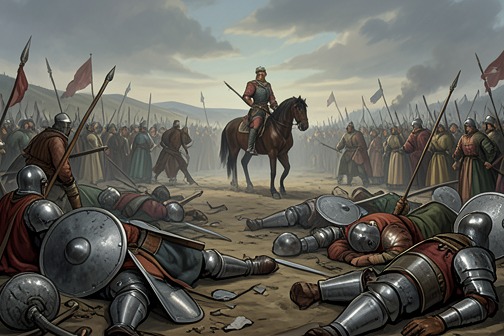
The [Hundred Years’ War](entity:event-recall-event-710299d68399) began, in the book’s account, when English forces crossed the Channel and invaded France in 1339. Its successive campaigns did more than contest territory: they depleted the French crown, unsettled loyalties among the nobility, and made war a defining condition of life in [Normandy](entity:location-recall-location-normandy-76cf0439a8b3). The conflict forms the political and material background to the fortunes of the Carrouges family, whose members served the French king even as other Norman nobles looked to [England](entity:location-recall-location-england-b153c1f368ea).
## Invasion, Defeat, and the Ransom of a King
English victories exposed the scale of the danger. At the [Battle of Crécy](entity:event-recall-event-1eddf58412c3) in 1346, the English cut down many of France’s leading knights, then captured Calais. In 1356, another slaughter of French knights at the [Battle of Poitiers](entity:event-recall-event-8670cdf07678) ended with King Jean captured and taken to London. His release came at a staggering price: France surrendered vast territories and noble hostages and promised a ransom of three million gold écus.
The war reached beyond armies and royal negotiations. English soldiers pillaged parts of France, while the capture of the king and the cost of securing his release left the kingdom politically and financially shaken. The book presents these defeats as turning points that made military service, ransom, and the security of land inseparable from the fate of the French realm.
## A Kingdom Under Pressure
After King Jean’s capture, France fell into civil conflict. Some rebellious nobles allied themselves with the English; peasants, angered by new taxes, rose against their lords; and rival factions in Paris fought and killed one another in the streets. Chronic drought and crop failures added to the strain. The [Black Death](entity:event-recall-event-e6fc3d82880f), which killed a third of Europe in 1348–49, returned at intervals, leaving further death and disruption in its wake.
The crisis also took on a religious dimension. The [Western Schism](entity:event-recall-event-07d48b48f860), beginning in 1378, divided Christendom between rival popes in Rome and Avignon. The Roman pope blessed England’s war in France, while English clerics preached a new crusade and sold indulgences to finance it. In the book’s account, military conflict, political fracture, hardship, and religious division compounded one another rather than unfolding as separate crises.
## Normandy’s Divided Loyalties
Normandy’s position made allegiance especially consequential. After losing most of the duchy to the French crown in the early thirteenth century, the English kings continued to covet it, and some Norman families remained alert to political changes that might favor England. When English forces began reconquering Normandy during the war, many Norman nobles defected and allied themselves with the invaders.
The Carrouges family took the opposing course. In 1380, its members swore fealty to the young Charles VI. Jean III de Carrouges had fought in campaigns against the English and served as a military captain at [Bellême Castle](entity:object-recall-object-036c2793a316); in 1364 he had also helped raise money for King Jean’s ransom. His son Jean IV carried that inheritance into a later generation of war. By 1380 he commanded a troop of four to nine squires in campaigns to drive the English from Normandy.
War also offered a route to advancement and income. Jean IV sought to enhance his reputation and enrich himself through booty and the capture of prisoners for ransom; a knighthood could have doubled his campaign pay. His family estate probably brought in 400 or 500 livres a year, while a squire’s daily campaign wage was half the one livre paid to a knight. Military service thus connected a family’s ambitions and finances to the wider struggle.
## The Scottish Expedition and the War’s Continuing Reach
In May 1385, Jean IV joined the [French expedition to Scotland (1385)](entity:event-recall-event-french-expedition-to-sc-3446dc22f317), commissioned by the French king. Its plan was to sail to Edinburgh, join the Scots, and move south through English territory, plundering towns and castles and destroying farms and villages as crops approached harvest. The expedition was led by Jean de Vienne, an experienced commander who had previously served with Jean de Carrouges during the Cotentin campaign. Its force comprised more than a thousand knights and squires, twice that number of crossbowmen and armed servants, and approximately three thousand fighters in all. Jean joined with nine other squires under his command.
The campaign also shows how the war extended beyond a single front: France sought to strike English lands through cooperation with [Scotland](entity:location-recall-location-scotland-4e112aa71aa3). Yet military service did not guarantee advancement or reward. Jean left Normandy seeking wealth and distinction after setbacks at Count Pierre’s court; his return to Normandy came after months away, without resolving the conflicts that would shape the next phase of his life.
## Terrain, Movement, and the Book’s Historical Frame
The war’s effects persisted between formal campaigns. Mercenary bands known as routiers prowled the countryside, making even familiar roads unsafe. Winter weather compounded the danger: rain, snow, ice, and mud slowed travel, while the harsh winter of 1385–86 made journeys across Normandy especially difficult. These conditions mattered to the book’s account of movement and timing, turning distance into a practical constraint rather than a simple measure on a map.
The narrative draws on chronicles, legal records, and other surviving documents, while acknowledging that sources sometimes disagree and that some gaps in the historical record are filled by the author’s reconstruction. Within that account, the Hundred Years’ War is both a sustained contest between kingdoms and a pressure shaping local choices: who remained loyal, who sought opportunity through arms, and how far violence and insecurity reached beyond the battlefield.
Event 2
Battle of Crécy
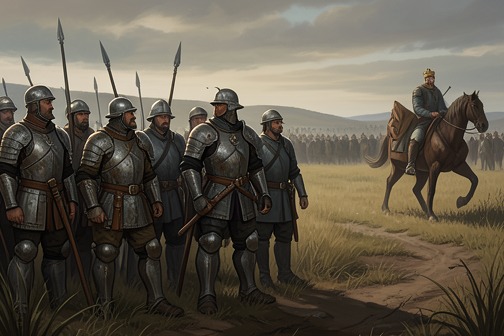
The [Battle of Crécy](entity:event-recall-event-1eddf58412c3) was a decisive early engagement in the [Hundred Years’ War](entity:event-recall-event-710299d68399), remembered in the book as a devastating loss for French chivalry. Its place in the account is part of a wider sequence of military defeats that left France without its king, burdened by ransom, and shaken by political and social conflict.
## Background
The conflict began in 1339, when English forces crossed the Channel and invaded France. The war brought repeated devastation: Crécy in 1346 was followed by the English capture of Calais, and then by another major defeat for the French at Poitiers.
## The Battle and Its Place in the War
At Crécy, the English cut down the flower of French chivalry. The account offers no battle tactics or casualty figures, but its stark description makes the destruction of the French knightly elite the event’s defining consequence. The battle stands as an early marker of the pressure English forces placed on France during the long war.
## The Defeats That Followed
A decade after Crécy, the English inflicted another great slaughter of French knights at Poitiers. They captured King Jean and took him to London. His release came only in exchange for vast French territories, noble hostages, and a ransom of three million gold écus, extending the military crisis into a grave political and financial one.
## Significance in the French Crisis
The account places Crécy within a succession of shocks rather than treating it in isolation. The loss at Poitiers and the cost of securing King Jean’s return helped frame the instability that followed: France fell into civil war, nobles joined the English, peasants rebelled against taxation, and factions in Paris fought one another. Crécy’s significance in this narrative lies in its early demonstration of the war’s destructive force against France’s military elite, before later defeats deepened the kingdom’s crisis.
Event 3
Capture of Calais
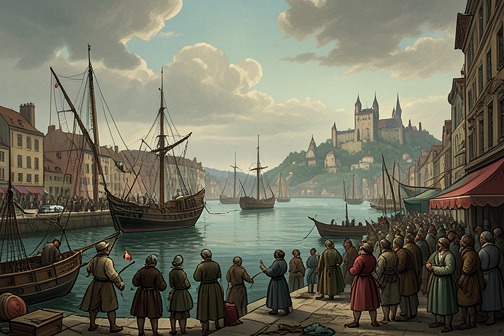
The [Capture of Calais](entity:event-recall-event-11cffa6cc450) was an English conquest during the opening decades of the [Hundred Years’ War](entity:event-recall-event-710299d68399). Following the French defeat at the [Battle of Crécy](entity:event-recall-event-1eddf58412c3) in 1346, English forces took the port, which remained an armed stronghold threatening Paris well into the reign of Charles VI.
## Background and Capture
The English crossed the Channel and invaded France in 1339, beginning a prolonged and ruinous conflict. In 1346, after the Battle of Crécy had cost France many of its leading knights, the English captured Calais. The account identifies the conquest as part of the wider sequence of French military reverses, but gives no further detail about the capture itself.
## A Strategic English Stronghold
Calais remained in English hands as a stronghold bristling with men and arms. In the account of France around 1380, the port is described as a strategic threat pointed toward Paris. Its continued English occupation therefore made the loss more than a moment of defeat: it left an enemy base near the heart of a kingdom already divided among rival powers and exposed to invasion.
## Place in the Wider Conflict
The capture preceded another major English victory at the [Battle of Poitiers](entity:event-recall-event-8670cdf07678), where the English seized King Jean and released him only in exchange for extensive territories, noble hostages, and a ransom of three million gold écus. These events form part of the same broader pattern of military pressure and territorial loss, but the source does not present the later defeat or ransom as a consequence of Calais’s capture. Calais’s significance in the narrative rests on its enduring strategic presence: long after the conquest, it remained an English-held position directed toward Paris.
Event 4
Battle of Poitiers
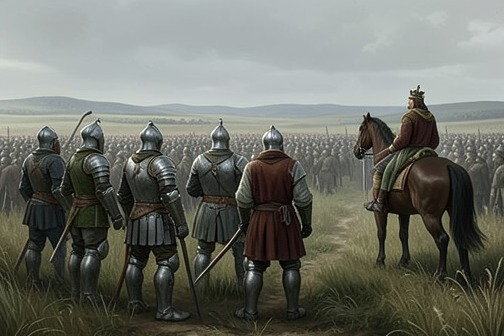
The [Battle of Poitiers](entity:event-recall-event-8670cdf07678) was a devastating English victory in the [Hundred Years’ War](entity:event-recall-event-710299d68399). The slaughter of French knights and capture of King Jean turned a military defeat into a national crisis: France had to bargain for its king’s release at immense cost, and the shock contributed to civil war.
## Background and Battle
The battle came amid [England](entity:location-recall-location-england-b153c1f368ea)’s invasion of France, which had begun in 1339. After the English had cut down the flower of French chivalry at the [Battle of Crécy](entity:event-recall-event-1eddf58412c3) in 1346 and captured Calais, Poitiers brought another great slaughter of French knights. The account places the battle in a sequence of escalating military reversals, rather than treating it as an isolated encounter.
## The King’s Captivity and Ransom
The English seized King Jean at Poitiers and took him to London. He was released only in exchange for vast French territories, numerous noble hostages, and a ransom of three million gold écus. The terms made the defeat consequential beyond the battlefield: France’s recovery of its king required both territorial concessions and a vast financial commitment, while hostages extended the settlement’s reach into the nobility.
## Political Consequences
France was stunned by the loss of its king and by the price demanded for his return. The account connects that shock and expense to the civil conflict that followed: rebellious nobles betrayed King Jean and joined the English, peasants angered by new taxes rose against their lords, and rival factions in Paris fought and killed one another in the streets. Chronic drought and crop failures added to the hardship. Poitiers thus appears not only as a military disaster but as a turning point whose costs intensified divisions within France.
Event 5
Black Death
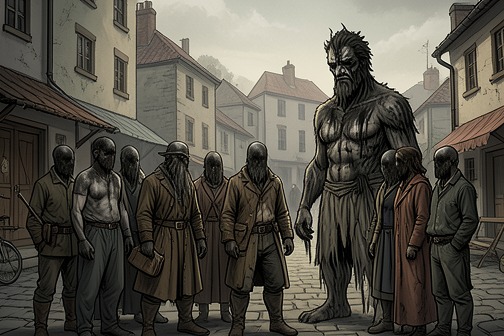
The [Black Death](entity:event-recall-event-e6fc3d82880f) was a recurring catastrophe that compounded the warfare and instability confronting France during the [Hundred Years’ War](entity:event-recall-event-710299d68399). Its first devastating wave, in 1348–49, carried off a third of Europe; the plague then returned roughly every decade, making recovery from one outbreak vulnerable to another.
## Arrival and Recurrence
The plague came after years of military reversals: [England](entity:location-recall-location-england-b153c1f368ea) had invaded France, won major victories at Crécy and Poitiers, and secured the capture and ransom of King Jean. France then faced civil conflict, rebellion, unrest in Paris, drought, and crop failures. The Black Death added a recurring source of loss to these existing crises. The account presents it not as an isolated episode but as a calamity that returned periodically and deepened the hardship of a country already under strain.
## Fear, Faith, and the Plague’s Meaning
The account presents the Black Death not only as repeated loss but as a crisis of interpretation. Artists of the period pictured Death as a shrouded skeleton with a great scythe, while black warning flags flew from the belfries of plague-stricken villages. In this atmosphere, the plague seemed to signal that God had abandoned France. The image of Death and the flags made the danger visible, while the account’s religious framing shows how the epidemic could unsettle confidence as well as threaten lives.
That sense of spiritual abandonment appears within a wider religious rupture. The [Western Schism](entity:event-recall-event-07d48b48f860) began in 1378, dividing Christendom between rival popes in Rome and Avignon; the account places this fracture in the same landscape of fear and upheaval shaped by recurring plague. It does not present the schism as a consequence of the epidemic, but as another crisis that made the period’s religious uncertainty harder to escape.
## Death in a Country Under Siege
The epidemic’s human cost is conveyed in the fate of the dead: corpses lay unburied in fields and accumulated in streets. Their presence made mortality part of the public landscape, not a loss confined to individual households. Because outbreaks returned every decade or so, the devastation recurred before the country could leave earlier waves behind.
The account sets this repeated loss within a France also exposed to raiding and insecurity. English armies were followed by bands of routiers who looted settlements and extorted tribute; amid this wider violence and anarchy, villagers raised earthworks and ditches, farmers fortified homes and barns, and towns, monasteries, and churches strengthened their walls. These defenses are presented as responses to the surrounding disorder, not as a direct consequence of plague. Together, the episodes show the Black Death recurring in a landscape where disease and armed insecurity compounded the difficulty of recovery.
## A Crisis Without a Clean End
By describing the plague as returning every decade or so, the account resists treating 1348–49 as a self-contained disaster with a clear endpoint. The first wave marks the scale of the catastrophe, but recurrence makes it part of the continuing conditions under which France endured the later fourteenth century: each return threatened to renew losses before their effects had passed.
Event 6
Jacquerie
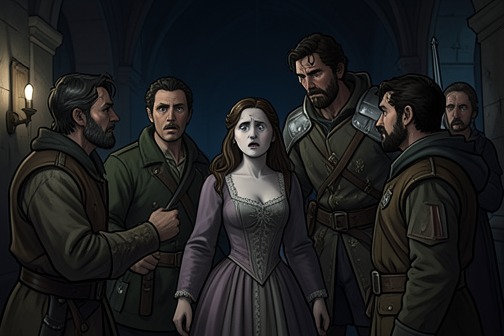
The [Jacquerie](entity:event-recall-event-0a69a2268a09) was a massive uprising in the late 1350s. The book invokes it as an instance of wartime violence against women: marauding peasants raped French noblewomen. It appears not as a sustained account of the uprising, but as a concrete example in a wider discussion of rape, law, and social attitudes in medieval France.
## The Uprising as Context
The evidence identifies the Jacquerie as a large-scale uprising and places the assaults during the disorder associated with it. It does not describe the uprising’s causes, course, leaders, or outcome, nor does it specify where or when within the revolt the attacks occurred.
## Violence Against Noblewomen
The account singles out French noblewomen as victims of rape by marauding peasants. This brief reference situates sexual violence within the dangers women faced during wartime and political unrest; it supplies no individual victims’ names or further circumstances.
## Law and Social Attitudes
The book sets this example beside the legal principle that rape was a felony and a capital offense in France, including [Normandy](entity:location-recall-location-normandy-76cf0439a8b3). It also distinguishes legal condemnation from varied social attitudes: noblewomen’s honor was highly prized by the aristocracy, while stories could depict violence against lower-status women more casually. The reference to the Jacquerie therefore illustrates wartime violence without implying that the law’s severity prevented such attacks.
## Place in the Narrative
The Jacquerie serves as one example in a discussion challenging the idea that medieval rape was scarcely treated as a crime. Its role is contextual rather than narrative: the account uses the uprising to show that legally punishable violence could nevertheless occur amid wartime disorder.
Event 7
Paris uprising of 1358
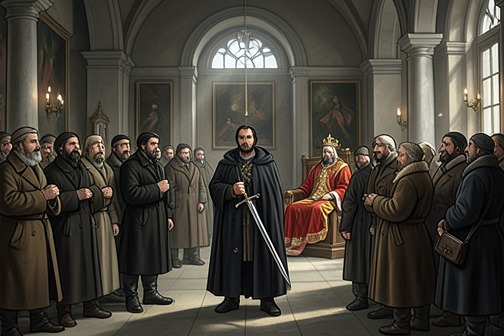
The [Paris uprising of 1358](entity:event-recall-event-1358-ad705d7e5b6f) was a violent protest against the terms of peace with [England](entity:location-recall-location-england-b153c1f368ea) and the enormous royal ransom imposed after King Jean’s capture. In the Grande Salle, a crowd led by Étienne Marcel entered the dauphin’s chamber and killed two royal counselors; the future Charles V survived when Marcel took him under his protection. The episode made the hall a stage for both popular resistance and the perilous exercise of royal power.
## The Grande Salle and the crisis of 1356
The uprising followed an earlier confrontation in the same hall. In the autumn of 1356, after the defeat at Poitiers and the capture of King Jean, some eight hundred delegates from across the kingdom assembled in the Grande Salle. They confronted the shaken dauphin, the future Charles V, and demanded that he purge the royal administration of counselors they held responsible for France’s disastrous position. That gathering established the hall as a place where demands for political change could be brought directly before the heir to the throne.
## The uprising and its violence
Two years later, the protest returned in a more explosive form. A crowd of three thousand entered the Grande Salle behind Étienne Marcel, the provost of the Paris merchants’ guild. The demonstrators opposed the peace treaty with England and the crushing royal ransom of three million gold écus. Marcel and his followers burst into the dauphin’s chamber; two royal counselors were seized and killed, and their bodies were thrown into the courtyard below. The attack brought lethal force into the royal household’s immediate space, making the confrontation more than a public petition against policy.
## The dauphin under protection
The dauphin was saved when Marcel placed him under his personal protection and gave him a hood in the rebels’ blue and crimson colors. The gesture sits uneasily beside the killings: the uprising’s leader helped shield the heir even as his followers attacked the royal administration. The account therefore presents the event not as a simple seizure of power, but as a volatile confrontation in which opposition to royal policy threatened the dauphin while Marcel’s intervention preserved him. The Grande Salle’s political significance lay in this proximity between collective protest, violence, and the contested authority of the crown.
Event 8
Western Schism
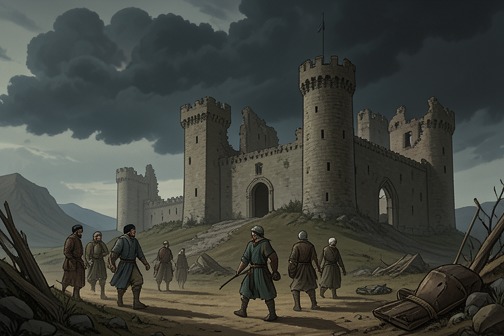
The [Western Schism](entity:event-recall-event-07d48b48f860) began in 1378, dividing Christendom between rival popes in Rome and Avignon. In the book’s account, the division was more than a dispute within the Church: it entered the politics of the [Hundred Years’ War](entity:event-recall-event-710299d68399) when the pope in Rome blessed [England](entity:location-recall-location-england-b153c1f368ea)’s war of conquest in France and English clerics preached a crusade against French heretics. The conflict thus placed religious authority amid a war already marked by political fracture, recurring plague, and violence against civilians.
## A Divided and Exhausted France
The Schism emerged against a long crisis in France. The Hundred Years’ War had begun with an English invasion in 1339. French defeats at Crécy and Poitiers, the capture of King Jean at Poitiers, and the immense ransom and territorial concessions required for his release helped leave the kingdom reeling. After the king’s capture, noble rebellion, peasant revolt, and factional violence in Paris compounded the damage; drought, crop failures, and repeated outbreaks of the [Great Plague](entity:state-recall-state-great-plague-de92c3cb5866) deepened the hardship.
By 1378, when the Western Schism began, the war had already damaged France’s political and social order. The country was also a target for routiers, armed bands who looted settlements and extorted tribute. Communities responded by fortifying villages, farms, towns, monasteries, and even churches. These defenses register a crisis lived locally: insecurity reached beyond battlefields and made protection a concern of ordinary settlement and religious life.
## Rival Papal Authority and the War
The immediate religious division was between rival papal camps based in Rome and Avignon. The book emphasizes how that division entered the Anglo-French conflict: the pope in Rome blessed England’s war of conquest in France, while English clerics called the campaign a crusade and sold indulgences to finance the fighting. Religious language therefore did not stand apart from military policy; it could lend sacred sanction to a campaign against French people presented as heretics.
This alignment sharpened the crisis of authority. Christendom was divided between competing popes, while a pope’s blessing and clerical preaching could be enlisted in support of a war against another Christian population. The account presents the Schism not simply as a split in allegiance but as part of the conditions in which political violence could be framed as religious duty.
## Violence under Crusading Language
The book links the war’s bloodlust and the crusading spirit kindled by the Western Schism to atrocities. In July 1380, English troops raided [Brittany](entity:location-recall-location-brittany-477fc442f207), attacking a convent, abusing the nuns, and carrying some of them away. The episode gives concrete force to the contrast between religious language and conduct: a conflict presented as crusading did not spare religious communities.
The raid also belongs to a wider pattern of insecurity described in the account. Routiers plundered towns and villages, while civilians built walls, ditches, towers, and moats for protection. The convent attack is presented as part of wartime violence, not as the sole consequence of the Schism; its significance lies in showing how crusading rhetoric and military brutality could coexist.
## Religious Judgment and Political Justice
The account also places the Schism-era conflict beside a separate dispute over who could claim religious authority in legal judgment. Judicial combat was understood by its defenders as a judgment of God, with the result believed to disclose the truth under divine will. Yet popes denounced the practice as tempting God, while kings opposed it in part because it challenged their authority over justice. These disputes are not described as consequences of the Western Schism, but they show the broader tension between religious sanction and political control that shaped the period.
In the trial by combat between Jean de Carrouges and Jacques Le Gris, the king presided in the name of royal and divine authority, while priests and sacred objects framed the fight as a judgment before God. The [Parlement of Paris](entity:organization-recall-organization-parlement-of-par-166ec083cfce) authorized the duel in the king’s name; it became the last judicial duel sanctioned by that court. Set beside the divided papacy and the blessing of war, this episode underscores the period’s competing claims to speak for divine judgment, without resolving the uncertainties surrounding either ecclesiastical or human verdicts.
Event 9
Franco-Scottish expedition to England (1385)
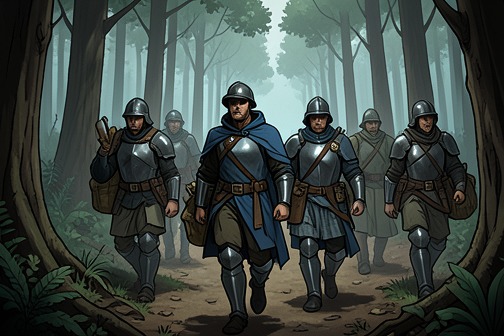
The [Franco-Scottish expedition to England (1385)](entity:event-recall-event-1385-180342e50b2a) was a French royal campaign that joined a large force of French soldiers to the Scots for a summer advance into northern [England](entity:location-recall-location-england-b153c1f368ea). The intended invasion became a costly raid rather than a decisive military success: the allies burned settlements and farms, failed to draw the English into a battle on their terms, and eventually withdrew amid distrust and shortages. For Jean de Carrouges, who joined in search of plunder and advancement, the campaign brought a knighthood but left him ill, in debt, and without the wealth he had hoped to secure.
## A Campaign for Wealth and Advancement
In the spring of 1385, Jean de Carrouges decided to leave [Normandy](entity:location-recall-location-normandy-76cf0439a8b3) and seek his fortune abroad. Recent setbacks at Count Pierre of Alençon’s court had diminished his standing and reduced his income. The expedition offered a way to escape those disappointments, make a name through military service, and perhaps earn the knighthood that had so far eluded him. He also expected that captured goods from English towns and castles might compensate for his losses at home. Count Pierre released him from his regular military service; the separation suited a lord weary of his troublesome vassal, while Carrouges had reason to hope that success overseas would improve his position.
The French king commissioned the expedition in May. Under the command of Jean de Vienne, the French force was to sail to Edinburgh, join the Scots, and move south into English territory. Its plans included raids on towns, castles, farms, and villages as crops approached harvest. The scale of the undertaking drew nobles from across France. Carrouges joined with nine squires under his command, part of a force of more than a thousand knights and squires, supported by roughly twice as many crossbowmen and armed servants. In all, the French contingent numbered about three thousand fighters.
## From [Sluys](entity:location-recall-location-sluys-068ef2a1fc83) to the English Border
The force gathered at Sluys, where a fleet of nearly two hundred ships was assembled with weapons, armor, supplies, and horses for a campaign that might last up to a year. Before departure, Jean de Vienne paid the army two months’ wages in advance. A muster held on May 8 recorded Carrouges and his nine squires at the port and listed 320 livres in pay for the group. The fleet set sail on May 20 and reached Leith, near Edinburgh, after sailing north along the Flemish coast and then west toward [Scotland](entity:location-recall-location-scotland-4e112aa71aa3).
The alliance proved uneasy from the outset. The Scots resented the arrival of a foreign army, and King Robert of Scotland refused to march into England until he had received a substantial payment. Jean de Vienne agreed, judging that the French could not proceed without their allies. In early July, a combined force of about five thousand men finally left Edinburgh, crossed the Tweed, and advanced eastward toward the coast, burning farms and villages along the way.
At Wark, the allied army halted before a fortress on a rocky rise above the Tweed. Its defenses included a four-story keep, ditches, crossbows, and heavy guns placed on the walls. Sir John Lussebourne, the English commander, had reinforced the garrison and refused a demand to surrender. The siege began, but the available account does not establish its outcome. The expedition continued south along the coast into lands belonging to Henry Percy, Earl of Northumberland, where the invaders destroyed more farms and villages and took livestock and valuables. Their advance brought devastation to the countryside, but did not settle the campaign in their favor.
## Retreat and the Breakdown of the Alliance
News that an English army was approaching reached the French and Scots through spies. Jean de Vienne wanted to fight a pitched battle; the Scots, worried by the size of the English force and by supply needs, urged a retreat toward their own country. The admiral accepted their advice rather than risk losing his allies. The English crossed the Tweed and retaliated by laying waste to the countryside. The Scots did not fight to stop them and even allowed them to pass through Scottish lands, a decision that further damaged the already strained partnership.
As the combined army withdrew north, burdened by a large quantity of plunder, Henry Percy’s son and heir attacked from the rear at night. The assault killed some men, scattered others, and took twenty-six prisoners of rank. Carrouges and Robert de Thibouville escaped capture. A muster on October 28 showed that Carrouges had lost five of the nine squires who had started the campaign with him. The record does not identify how each man was lost; some may have died in earlier fighting or from disease, and some may have been taken in the attack. The encounter was the campaign’s last battle.
With the season for fighting ending, Jean de Vienne decided to winter in Edinburgh with the depleted army. The French found provisions difficult to obtain even when they could pay, and food and drink for both men and horses were scarce. The admiral’s dispute with the Scottish court added to the insecurity, and French nobles feared they might die from poverty or violence if they stayed. Jean de Vienne eventually allowed those who wished to leave to depart. Many French soldiers returned through [Flanders](entity:location-recall-location-flanders-67d09b61ddb4) or by other routes, short of arms and horses and angry at the reception they had received.
## Carrouges’s Return and the Campaign’s Legacy
Carrouges returned to Normandy late in 1385 after more than six months abroad. The expedition had consumed the money he spent equipping himself, while the plunder he expected to bring home never made good that investment. He also returned with a chronic fever that left him weak and exhausted. The campaign had cost him time, money, health, and five companions from his troop.
It did, however, bring the advancement he had hoped for. A review of the French army after its return to Scotland listed him as Sir Jean de Carrouges, recording his new status as a knight. The title doubled his daily campaign pay, from half a livre to one livre, though the wages due to him remained in arrears. That distinction was the expedition’s clearest personal reward for him, set against the scale of its failures: the allies had raided English lands but never secured a sustained joint campaign, and Carrouges came home with depleted resources rather than the fortune he had sought.
Event 10
Siege of Wark Castle (1385)
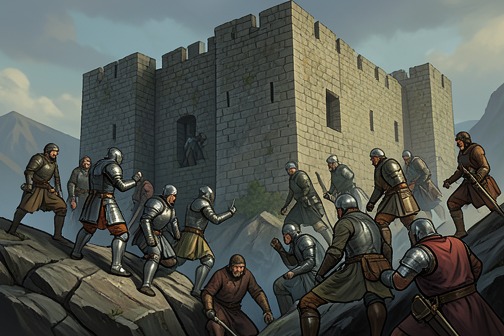
The [Siege of Wark Castle (1385)](entity:event-recall-event-ae55e35ef14f) was a costly assault in the French campaign into [England](entity:location-recall-location-england-b153c1f368ea): the attackers overcame a strongly defended fortress, only to destroy it because they could not safely keep it. Its course exposed the limits of a fast-moving raiding force, which could take a castle by force but lacked the means to make it a lasting possession.
## Causes and Defenses
The French and Scots reached [Castle Wark](entity:object-recall-object-castle-wark-a5b8f1424604) during their southward advance through England. The fortress stood on a rocky outcrop above the Tweed. Its four-story keep had stone vaults around its entrance and five openings in the walls through which defenders could attack those below. Sir John Lussebourne, who was inside with his wife and children, had been forewarned and strengthened the garrison. Cannons and crossbows guarded the battlements, while ditches around the castle slowed attackers and exposed them to fire from above.
Admiral Vienne sent a herald to demand Sir John’s surrender, threatening a siege if he refused. Sir John answered from the walls with insults and a warning that Vienne should withdraw before being caught by the Scots’ treachery. The exchange closed the possibility of surrender; the assault began soon afterward.
## The Assault and Capture
The attackers had no trebuchets to hurl heavy stones over the walls, and their small portable cannons could not break the thick masonry. Castle Wark’s rock foundation also prevented them from tunneling beneath its walls. Nor could they wait for hunger to weaken the well-provisioned garrison: the campaign’s need for speed left no time for a prolonged blockade.
Vienne therefore ordered an escalade. His men lashed long poles together as ladders and tried to climb the walls, where the defenders met them in close combat. The French renewed their attacks, while crossbowmen positioned around the fortress steadily targeted the English garrison. The Scots, despite having marched with the French into England, refused to take part in the siege. The attackers eventually entered the castle and captured Sir John, his family, and the other defenders. The first French inside took more than forty prisoners.
## Destruction and Significance
Victory did not make Castle Wark a usable stronghold. The French judged that, so far advanced in England, they could neither keep nor guard it. They burned and destroyed the fortress rather than leave it as a position they could not defend. The outcome thus joined capture to abandonment: the assault achieved its immediate military objective, but the campaign’s haste and distance from secure support prevented the attackers from turning possession into control.
Event 11
Siege of Carlisle (1385)
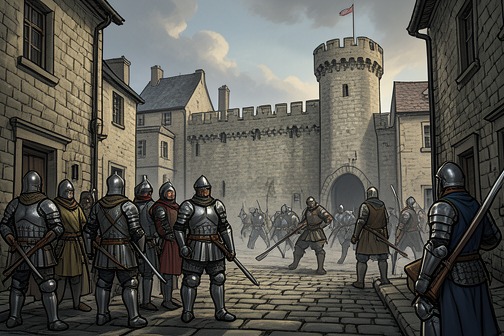
The [Siege of Carlisle (1385)](entity:event-recall-event-1385-476d8b490b5c) was the failed culmination of a French and Scottish raid into northern [England](entity:location-recall-location-england-b153c1f368ea), in which Jean de Carrouges took part. The attackers reached Carlisle after a destructive march through enemy territory, but the town’s defenses resisted their assault. Their retreat did not end the danger: Sir Henry Percy struck from behind at night, and Carrouges and Robert de Thibouville were fortunate to escape capture or death.
## Background and approach
The siege came during a second French incursion into England. While King Richard’s forces were occupied elsewhere, the French and some of their still-loyal Scottish allies raided Cumberland, hoping to increase their gains through plunder and prisoners. Carrouges and his men joined the campaign with the same prospect of enrichment.
Moving down the coast, the invaders encountered little opposition because the country’s men-at-arms were away with the English king. They destroyed what lay in their path before circling back to Carlisle. The town had an older military history as a Roman frontier fort and an anchor of Hadrian’s Wall; by 1385 it was an English stronghold.
## The assault and its failure
On September 7, the French and Scots attacked Carlisle with ladders, attempting to scale its walls. Their aim was either to destroy the town or take it by storm. Carlisle’s walls, towers, and ditches, together with its ample provisions, made it a difficult target, and the vigorous assault failed.
Unable to penetrate the defenses or achieve the pillage and destruction they had sought, and concerned about remaining deep in enemy territory, the attackers abandoned the siege. The episode marked the limit of their advance: they could devastate exposed countryside, but the fortified town stopped them.
## Retreat and aftermath
As the French and Scots turned north, their large haul of plunder slowed their movement. Sir Henry Percy, heir to the Earl of Northumberland and known as Hotspur for his speed and ferocity on horseback, attacked them from the rear at night. His sudden assault killed many and put others to flight; he also took twenty-six prisoners described as persons of substance.
Carrouges and Robert de Thibouville were not among those captured or killed. A review of the admiral’s army on October 28 recorded that Carrouges had lost five of his nine comrades. The record does not establish when or how each man was lost: some may have died in earlier fighting or from disease, while some may have fallen in Percy’s attack. That ambush proved the campaign’s last battle.
Event 12
Marguerite de Carrouges’s alleged rape

[Marguerite de Carrouges’s alleged rape](entity:event-recall-event-marguerite-de-carrouges-e00168bd6601) at [Château de Capomesnil](entity:object-recall-object-ch-teau-de-capomesnil-533c95ca62cf) on January 18, 1386, became the central accusation in a case that ended in a judicial duel but never produced an uncontested account of what had happened. Marguerite maintained that Jacques Le Gris and Adam Louvel were responsible; the uncertainty that followed made her testimony, the social risks of speaking, and the limits of the legal process inseparable from the event’s legacy.
## Background and Stakes
The accusation carried particular danger in a society that tied a noble wife’s reputation to chastity and loyalty. Aristocratic concern about legitimate heirs made a wife’s sexual conduct a matter not only of personal honor but of inheritance. Jean de Carrouges had married Marguerite, who was much younger than he was, in part with the expectation that she would bear legitimate children. Those expectations placed a severe burden on her reputation if her account were rejected or treated as evidence of adultery rather than an assault.
Her position was further complicated by her father’s history. Robert de Thibouville’s treasons had left the family under suspicion, and Marguerite was regarded as a traitor’s daughter. She was also the wife of one of Count Pierre of Alençon’s troublesome vassals, while Le Gris was the count’s favored squire and was well regarded at the royal court. These inequalities did not establish the truth or falsity of the accusation, but they shaped the unequal circumstances in which it had to be heard.
## Disclosure and Testimony
After the alleged attack, Le Gris warned Marguerite against telling her husband, suggesting that Jean might suspect her of adultery and harm her. The warning exploited a real vulnerability: accusations of infidelity could expose wives to violence, while a charge against a powerful man could bring scandal and disbelief. Marguerite nevertheless decided to tell Jean when he returned from Paris. She committed the day and time of Le Gris’s visit to memory, anticipating the questions she would face and the demands of a public case.
Marguerite remained silent for the few days before Jean’s return, probably on January 21 or 22. Dame Nicole, her mother-in-law, had returned from a shorter journey to [Saint-Pierre-sur-Dives](entity:location-recall-location-saint-pierre-sur-div-0fc3d6f64daf), but Marguerite did not confide in her. Her delay, as the account presents it, was not a withdrawal of the accusation: she waited for her husband and then proceeded despite the dangers attached to disclosure.
In her later sworn account, Marguerite said that she saw both men in daylight, that Louvel named Le Gris before Le Gris appeared, and that she spoke with each before the attack. Her accusation therefore implicated two men, not Le Gris alone. This detail later mattered in evaluating theories of mistaken identity or deliberate fabrication: the book argues that naming Louvel added a further burden of proof rather than making the charge easier to sustain. Marguerite repeatedly maintained her account under oath, including before the highest court in France.
## Legal Stakes and Judicial Duel
The prospects for obtaining a hearing were unfavorable. The identity of the attackers and the absence of witnesses in Marguerite’s favor created a difficult problem of proof. Le Gris could expect support in the court at Argentan through his relationship with Count Pierre, and, as a cleric in minor orders, could claim benefit of clergy to seek transfer to an ecclesiastical court. The accusation thus faced obstacles both in establishing what had happened and in reaching a forum that would judge it impartially.
The dispute ultimately led to a judicial duel between Jean de Carrouges and Le Gris, authorized by the [Parlement of Paris](entity:organization-recall-organization-parlement-of-par-166ec083cfce). The duel’s formal preparations sought to place the men on equal terms: because Carrouges was a knight and Le Gris a squire, Le Gris was knighted before the fight. Their circumstances were not otherwise identical. Carrouges had more military experience, while Le Gris was larger, wealthier, and better equipped; accounts also describe Carrouges as weakened by fever. Once combat began, the ceremonial ideals of chivalry gave way to an unrestricted fight. The procedure made the outcome of a physical contest carry the weight of judgment on the accusation, without resolving the historical uncertainty for every observer.
## Contested Memory and Significance
The case remained disputed from the beginning. Jean Froissart reported that the king, court, and crowd welcomed the duel’s outcome, while Jean Le Coq, Le Gris’s lawyer, recorded divided reactions, including the view that Le Gris had been unjustly killed. The [Saint-Denis](entity:location-recall-location-saint-denis-91ae1e7341eb) Chronicle later claimed that Marguerite had accused Le Gris mistakenly and in good faith, and that another offender eventually confessed. A version of this story circulated in the 1430s as well. The account of a mistaken accusation and belated confession offered one way to explain the outcome while preserving Marguerite’s honor, but it did not settle the case.
The book challenges both the mistaken-identity story and the alternative claim that Marguerite knowingly lied, whether on her own initiative or under pressure from her husband. It notes that accusing Louvel as well as Le Gris made a fabricated account more vulnerable to contradiction, and that the surviving record includes Le Gris’s alibi but no comparable testimony exonerating Louvel. These considerations are presented as reasons for skepticism toward the later legend, not as proof that the event can now be reconstructed with certainty. The account’s conclusion is that the truth may never be established to everyone’s satisfaction.
The duel was the last judicial duel authorized by the Parlement of Paris. Later appeals there did not result in permission for another, although trial by combat continued elsewhere in France and Europe. The case’s contested outcome became an enduring example in arguments against judicial combat: [Enlightenment](entity:time-recall-time-enlightenment-095445f067b9) writers, including Voltaire, invoked it as evidence of the injustice of letting a fight determine a legal dispute. The accusation’s afterlife thus preserved two unresolved questions at once—what happened to Marguerite, and whether the method used to judge her claim could ever reliably answer that question.
Event 13
Carrouges–Le Gris quarrel
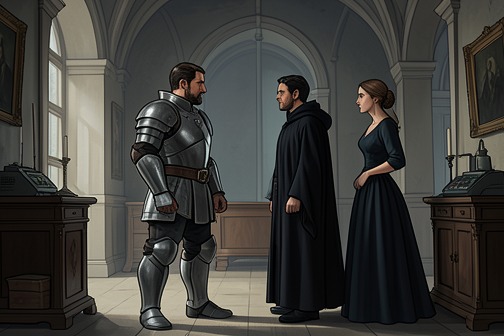
The [Carrouges–Le Gris quarrel](entity:event-recall-event-carrouges-le-gris-quarr-6cfaacf7d93d) transformed a dispute between a knight and a favored squire into a public trial by combat, making the reputations and lives of Jean de Carrouges, Jacques Le Gris, and Marguerite de Carrouges depend on a single violent encounter. Carrouges killed Le Gris in the duel, and the result was treated as vindication of the accusation Marguerite had made. Yet the verdict of combat settled neither the contested inheritance that had helped provoke the quarrel nor the historical argument over the case.
## Land, marriage, and competing claims
The conflict had a material history as well as a personal one. In 1377 Marguerite’s father, Robert de Thibouville, sold Aunou-le-Faucon to Count Pierre of Alençon; the following year, the count gave the fief to Le Gris. When Jean de Carrouges married Marguerite in 1380, he recognized that the valuable estate had passed beyond his reach and began a suit to recover it. Count Pierre secured the king’s approval for his grant to Le Gris, defeating Carrouges’s challenge. The book identifies the fief as the point over which Carrouges and Le Gris first quarreled: their later hostility was bound to a property dispute that Carrouges could not resolve through ordinary litigation.
The accusation also carried particular risks for Marguerite. In the account of aristocratic marriage presented by the book, a wife’s chastity was tied to the certainty of legitimate heirs and the preservation of family inheritance. Jean, many years older than Marguerite, had married a younger woman in the expectation that she would bear him heirs. At the same time, Marguerite’s father’s earlier treason against the French crown had left the family under suspicion. Le Gris’s threats, as described in the account, exploited the danger of public disgrace: Marguerite could be doubted because of her family history, while her husband might suspect her of adultery rather than believe her accusation. The possibility that Jean could react violently to such a suspicion made disclosure dangerous within her marriage as well as before the courts.
## From accusation to a public ordeal
Marguerite did not remain silent indefinitely. Although she faced serious obstacles to proving her charge, she resolved to tell Jean and remembered the day and time Le Gris had come to the castle. Jean returned from Paris only a few days after the attack. The account stresses that keeping quiet until then was not acceptance of the threat, but a short interval before she disclosed what she said had happened and sought redress.
The case eventually became a public contest before the [Parlement of Paris](entity:organization-recall-organization-parlement-of-par-166ec083cfce) authorized combat in the king’s name. At the duel, the procedure made the rivals appear formally equal: Le Gris, a squire, was knighted immediately before fighting Carrouges. Ceremony could equalize their legal standing, but not their experience or resources. Carrouges had fought in numerous campaigns, most recently in [Scotland](entity:location-recall-location-scotland-4e112aa71aa3); Le Gris had seen less military service, though he was larger and stronger, wealthier, and better equipped. Contemporary accounts also described Carrouges as weakened by a prolonged fever and a fresh onset of it on the day of the duel. These disparities made the ritual promise of an even contest uncertain in practice.
## The duel as public judgment
The combat took place at [Saint-Martin’s dueling ground](entity:object-recall-object-f44c8a32d1fe) before a vast audience, from common spectators to nobles, members of the royal court, and visitors from abroad. The king was both the most exalted spectator and, by law, the presiding judge. Carrouges arrived with his relatives and pledges, attendants carrying his equipment, and his armored warhorse. Marguerite followed in a carriage draped in black, wearing a long black robe; her father and cousin were among her companions. Recently risen from childbed, she was also the central human presence in a spectacle whose outcome would determine her fate. If Carrouges died, she faced execution under the sentence hanging over her as the accuser.
The field’s arrangements and rules turned the encounter into a tightly controlled public ritual. Officials watched from towers, guards kept spectators back, and stands separated the king and high-ranking nobles from other court members, foreign visitors, ladies, burghers, and commoners. Heralds announced prohibitions on weapons and on disrupting the audience’s view. Spectators were required to remain silent; even speaking or crying out carried severe penalties. Before the combat, officials inspected the weapons, and the formal equality of the proceedings was reinforced by Le Gris’s knighting. Once the fighting began, however, the protections and courtesies of a tournament did not apply. The combat was without quarter, and the book contrasts its lethal possibilities with the chivalric formality of its ceremonies.
After Carrouges killed Le Gris, he turned toward the royal stand and asked whether he had done his duty. The crowd, silent throughout the duel, answered with a collective shout. That sudden release of sound carried beyond the monastery walls into the surrounding district and Paris, where people could hear that the celebrated quarrel had reached its conclusion before knowing who had won. The public acclamation marked Carrouges’s victory as a communal verdict, though it could not make the spectators witnesses to the underlying events at the heart of Marguerite’s accusation.
## Rewards, unresolved claims, and disputed memory
Carrouges received a royal pension and appointment as royal chamberlain, then, within two months of the duel, an additional 6,000 livres in gold from the Parlement of Paris. The payment, awarded on February 9, 1387, was charged against Le Gris’s estate and described as compensation for expenses and injuries caused during the prosecution. These rewards followed the killing of his rival, the official vindication of his cause, and the preservation of Marguerite from execution. They did not satisfy Carrouges’s desire to recover Aunou-le-Faucon.
After Le Gris’s death, much of his land reverted to Count Pierre, including the disputed fief. Carrouges tried again to obtain it, attempting to use part of the 6,000 livres toward its purchase. The renewed dispute lasted nearly two years, but the Parlement ruled on January 14, 1389, that Aunou-le-Faucon rightfully belonged to Count Pierre. The land therefore remained beyond Carrouges’s grasp, despite the victory that had settled his combat with Le Gris. In the months after the duel, Marguerite cared for her first known child, Robert, named after her father; two more sons followed.
The quarrel’s fame outlasted its immediate legal and material outcomes, but later accounts disagreed about what the duel had proved. Jean Froissart, writing within a few years, said the king, court, and crowd rejoiced at the result. Jean Le Coq, Le Gris’s lawyer, described reactions as mixed: some considered Carrouges vindicated, while others thought Le Gris had been unjustly killed. The [Saint-Denis](entity:location-recall-location-saint-denis-91ae1e7341eb) Chronicle later claimed Marguerite had accused Le Gris mistakenly but in good faith and repeated a story that a condemned criminal confessed to the crime. In the 1430s, Jean Juvénal des Ursins retold that claim with a sick man on his deathbed in place of the condemned felon. The version alleging a false accusation and a belated confession continued to circulate, while commentators remained divided over the case. The duel furnished a decisive public outcome; it did not supply later readers with an uncontested account of the truth.
Event 14
Parlement of Paris inquiry into the Carrouges–Le Gris case
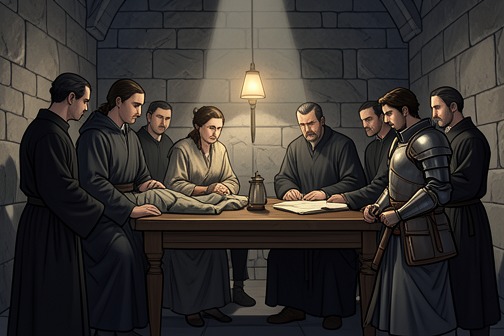
The [Parlement of Paris inquiry into the Carrouges–Le Gris case](entity:event-recall-event-parlement-of-paris-inqu-d577a3ef138a) transformed Marguerite de Carrouges’s allegation against Jacques Le Gris into a public contest involving royal officials, noble networks, and competing claims to credibility. After more than two months of examination, the Parlement did not determine what had happened: on September 15, 1386, it authorized a trial by combat. That decision moved the unresolved question from testimony and investigation to a duel whose result would be treated as judgment.
## The allegation and the problem of proof
The case concerned [Marguerite de Carrouges’s alleged rape](entity:event-recall-event-marguerite-de-carrouges-e00168bd6601), an accusation made against a squire who was favored by Count Pierre of Alençon and known at the royal court. Marguerite’s position made the prospect of seeking justice especially precarious. Her father’s treason had left the family under a cloud, and her husband, Jean de Carrouges, was one of the count’s troublesome vassals. Le Gris, by contrast, could expect a friendly hearing in the count’s court at Argentan. The allegation was difficult to prove, while the parties entered the dispute with unequal access to influence and protection.
Le Gris had warned Marguerite that disclosure could bring scandal and danger. He also suggested that her husband might suspect her of adultery or even kill her. Jean’s jealousy and suspicion were known from their long experience in the court at Argentan, making the threat more than a general warning. Marguerite nevertheless resolved to tell her husband when he returned. She committed the day and time of Le Gris’s visit to memory, preparing for the questions she expected from her family and for the public scrutiny that an accusation would bring. Jean returned from Paris around January 21 or 22; Marguerite had remained silent until then, including during her mother-in-law’s return from a journey to [Saint-Pierre-sur-Dives](entity:location-recall-location-saint-pierre-sur-div-0fc3d6f64daf).
The legal setting further complicated the case. Le Gris was a cleric in minor orders and could claim benefit of clergy, potentially transferring proceedings from a secular court to a church court. Meanwhile, the norms imposed on aristocratic wives made Marguerite’s sexual reputation central to the dispute: noblemen valued chastity in their wives as a safeguard for legitimate inheritance, although the same standards did not necessarily govern their own conduct. Her testimony therefore confronted not only the difficulty of proof but a system that closely scrutinized a woman’s honor while leaving her vulnerable to suspicion.
## A widening investigation in July and August
As the Parlement’s inquiry continued through July and into August, new interventions enlarged the case rather than resolving it. At the end of July, Guillaume Berengier reached Paris with sealed letters for the Parlement from Guillaume de Mauvinet, the bailiff of [Caen](entity:location-recall-location-caen-0daee77e4e86). Mauvinet also instructed him to deliver additional information orally, described as secret matters not to be put in writing. The letters and the unwritten report have not survived. Their contents remain unknown, but the connection was significant: Mauvinet was the official before whom Dame Nicole had appeared at Saint-Pierre-sur-Dives on the day of the alleged crime. The book presents the new dispatches as a further effort to damage Jean’s appeal by discrediting Marguerite’s testimony, not as proof that the attempt succeeded.
The Parlement also returned to the case of Adam Louvel, Le Gris’s alleged accomplice. Louvel had been arrested and questioned months earlier on Count Pierre’s orders, but the same verdict that exonerated Le Gris had absolved him. On July 20, the Parlement demanded guarantees that Louvel would appear in Paris. Two days later, he appeared before Charles VI at the [Château de Vincennes](entity:location-recall-location-ch-teau-de-vincennes-e02d439e629b). There, Thomin du Bois, a squire and cousin of Marguerite, accused Louvel of attacking her and threw down his gage of battle. He demanded a duel, and argued that Louvel’s refusal to fight after denying the accusation should be treated as an admission of guilt. The challenge raised the possibility of two simultaneous duels, one involving Jean and Le Gris and another involving Thomin and Louvel.
Louvel asked for a jour d’avis, a period in which to consult legal counsel, and received until July 24. The Parlement’s records show no further action on that date. By August 20, however, the inquiry had widened again: Louvel’s son Guillaume, Estiene Gosselin, and Thomas de Bellefons were taken into custody for examination in connection with the pending wagers of battle. The record describes Jean and Thomin as plaintiffs on one side and Le Gris and Louvel as defendants on the other, suggesting that the two challenges had been joined into a single proceeding.
Louvel, by then confined in the Conciergerie prison attached to the Palais de Justice, was ordered to be questioned under torture. Judicial torture was increasingly used as confession became more important to determining guilt, even as ordeals and duels receded. Jean Le Coq’s diary records that Louvel and a maidservant said to have been at the Carrouges residence that day were questioned; neither confessed. The inquiry also reached Jean Beloteau, a recently widowed squire whose account formed part of Le Gris’s alibi. The bailiff of the bishop of Paris arrested him on suspicion of raptus, a term that could mean abduction or rape.
## The court during a royal absence
The investigation proceeded amid competing political priorities. Charles VI and his uncles left Paris for [Flanders](entity:location-recall-location-flanders-67d09b61ddb4) as part of preparations for a planned invasion of [England](entity:location-recall-location-england-b153c1f368ea). The king had approved a large expedition and vowed to set foot on English soil before returning to Paris. With the royal party away, the Parlement resumed its work, including the Carrouges–Le Gris inquiry. Jean and Le Gris remained prisoners of Paris but could move about the city; they were required to attend the Palais de Justice whenever summoned.
Marguerite, meanwhile, was at least eight months pregnant. She was waiting both for the birth and for the court’s decision in unfamiliar surroundings, under the strain of an inquiry whose outcome would determine her future as well as her husband’s. The surviving record does not disclose what she privately feared about the pregnancy. It does show that the investigation continued while her physical circumstances narrowed her freedom of movement and the legal process offered no settled conclusion.
Le Coq’s diary preserves the uncertainty surrounding the case. He noted that some people said Le Gris would not confess because doing so would bring scandal upon his sons and friends, particularly after Count Pierre had sworn to his innocence. That account raised the possibility that Le Gris’s position was shaped by pressure from those around him, and Le Coq’s observations suggest that the lawyer himself had doubts. Yet proximity to the proceedings did not give him certainty. His final assessment acknowledged that the truth remained unknown. The inquiry thus accumulated testimony, arrests, and political claims without producing evidence that could settle the central dispute.
## The September decision
On September 15, more than two months after the inquiry began and eight months after the date of the alleged crime, the Parlement summoned Jean and Le Gris to hear its decision. With Charles VI and his uncles still away, Arnold de Corbie, the court’s first president, presided in the Grand’ Chambre. The two men appeared with their lawyers, supporters, and six noble pledges each. Marguerite may have been absent because she was near the end of her pregnancy.
A decision to authorize combat was unusual. The Parlement had not authorized a duel in an alleged rape case since 1354, and it had rejected numerous appeals for judicial combat in the intervening decades. The court’s order therefore did not amount to a routine response to the evidence. Its decision may also have reflected the political difficulty of choosing between two well-known royal servants. Both sides had powerful supporters, and public opinion in Paris was divided. With the king and his uncles absent, granting Jean’s request could allow the court to avoid a direct judgment that might deepen the controversy and leave the ultimate determination to God.
The Parlement ordered a trial by combat between Jean de Carrouges, knight, and Jacques Le Gris, squire. The duel was initially appointed for November 27, at least forty days after the ruling and more than two months away. The delay meant that Marguerite was expected to give birth before the combat took place. The king later postponed the duel for a full month so that he could witness it after returning from Flanders.
## From investigation to public ordeal
The ruling redirected the case from an inquiry into testimony toward a public ritual of combat. The planned event at [Saint-Martin’s dueling ground](entity:object-recall-object-f44c8a32d1fe) was prepared for thousands of spectators, with separate viewing stands for the king and high-ranking nobles, other members of the royal court, foreign nobles, ladies, and lower-status townspeople. The arrangement made rank visible even as the duel was presented as a means of settling a dispute that the court had not resolved through evidence.
The ritual also demanded strict control of the audience. Heralds announced prohibitions on weapons, standing in ways that obstructed the view, and speaking or gesturing during the fight; violations could bring severe penalties. Chroniclers described spectators watching in silence. The king would preside, and the combatants’ bodies would stand in for a judgment the inquiry had been unable to establish. After the duel, once Jean de Carrouges asked whether he had done his duty, the crowd answered together, breaking the silence that had governed the contest. The inquiry’s consequence was therefore more than a scheduled fight: it converted unresolved testimony into a public verdict whose authority depended on the spectacle and its result.
Event 15
Trial by combat of Jean de Carrouges and Jacques Le Gris

The [Trial by combat of Jean de Carrouges and Jacques Le Gris](entity:event-recall-event-trial-by-combat-of-jean-a92e3985a747) was both a legal appeal and a public test of competing oaths. Authorized by the [Parlement of Paris](entity:organization-recall-organization-parlement-of-par-166ec083cfce) in a case resting on uncorroborated testimony, it placed the lives of the two men—and Marguerite de Carrouges’s life—under the judgment of combat. Its elaborate royal and religious ceremonies made the proceeding appear to submit the dispute to God, while its eventual place in legal history was stark: it was the last judicial duel sanctioned by the Parlement.
## Background and authorization
In medieval French law, a nobleman appealing a case to the king could challenge his opponent to judicial combat. This was not simply a private duel over an insult: it was a formal legal procedure intended to establish which party had sworn falsely. The combat was understood as a judgment of God, with victory taken to disclose the truth through divine will. In a criminal case, the principals ordinarily had to fight in person; a champion could substitute only for a woman, an elderly person, or someone infirm.
The procedure had become increasingly unusual. Popes condemned judicial combat as an improper appeal to God, while kings opposed it in part because it limited their control over justice. Louis IX removed it from French civil law in 1258, and Philip IV outlawed it in war and then in peacetime. After nobles objected, Philip restored it in 1306 as an appeal in certain criminal cases, including rape, but only under the king’s direct jurisdiction. That history made the Parlement’s decision consequential: no rape case had received its authorization for a duel since 1354, and it had rejected appeals for combat in 1330, 1341, 1342, 1343, 1372, 1377, and 1383.
The court nevertheless ordered Jean de Carrouges and Jacques Le Gris to fight. The case had divided people at court and in Paris, with supporters on both sides. The court may have been wary of openly siding with either man, particularly while Charles VI and his uncles were away in [Flanders](entity:location-recall-location-flanders-67d09b61ddb4). By authorizing the combat, it granted Jean’s appeal while leaving the ultimate verdict, in the logic of the procedure, to God. The date was set for November 27, 1386, at least forty days after the order; Charles later postponed the combat for a month so he could attend after returning from Flanders.
## The field and its audience
The combat was to take place at the [Saint-Martin-des-Champs Priory](entity:organization-recall-organization-saint-martin-des-8435e7572e57), whose grounds included a field built for such encounters and large enough to accommodate thousands. Preparations distinguished among spectators by status. Most were commoners from Paris and its suburbs, who would watch from the ground or through gaps in the high timber fencing. The prominent stands were divided among the king and leading nobles, members of the royal court, foreign nobles seated according to rank, and, in separate stands, women. Lower-ranking spectators, including burghers and merchants, occupied places further down this social arrangement.
The strict organization of the venue reflected the court’s effort to control both the combat and the public response to it. Guards were to keep spectators from the inner fence and prevent disturbances. A herald announced that those without official duties or royal permission could not carry weapons, and that spectators must remain seated and refrain from speaking, gesturing, or otherwise disrupting the battle. Even an outburst could bring severe penalties. The crowd was not meant to behave as at a noisy entertainment: its enforced silence made the duel a supervised legal and political spectacle.
## Ceremony and unequal stakes
Charles VI was more than the most important spectator. As the king in whose name the Parlement had authorized the duel, he was also its presiding judge. The combat could not begin until he arrived and took his seat. The royal procession included officials responsible for the ceremony and weapons, heralds, guards, and a sword of justice carried before the king. In this setting, royal authority framed an ordeal represented as divine judgment.
Jean arrived first, accompanied by relatives, pledges, squires, and attendants carrying his equipment. He rode on a palfrey, with his visor open and his sword and dagger at his belt; a page led his armored warhorse. His arms appeared on his shield and clothing, and he carried a blue pole topped with a silver crucifix, making the sign of the cross during his arrival. Marguerite came in a carriage draped in black, accompanied by her father and other relatives. She had recently given birth, and the carriage may have reflected her recovery from childbirth. Her black clothing also marked the grave stakes: although she had not been legally condemned, she was to witness the combat under a sentence of death if her husband lost.
Officials inspected the combatants’ weapons to ensure that no prohibited device was present and that their lances, swords, axes, and daggers were of equal length. The men were also brought to formal equality in status. Because Jean was a knight and Le Gris a squire, Le Gris was knighted before the fight. The preparations thus sought to regularize the encounter: equalized equipment, regulated conduct, and a prescribed sequence of ceremonies made the outcome seem subject to procedure, even as the procedure depended on a lethal contest.
## Oaths, combat, and resolution
Before the fight, priests brought an altar to the center of the field, with a crucifix and a prayer book open to an image of Christ’s Passion. The sacred objects presented the combat as a divine judgment and recalled the Passion as a model of innocent suffering. The men swore three formal oaths before the priests and then kissed the crucifix. In one oath they joined left hands, rather than the right hands used in other mutual oaths, marking their bond as one of hostility. A priest warned them that the consequences reached beyond their bodies: the guilty party risked damnation as well as defeat. The altar and religious objects were removed before battle began.
After the ceremonies, Jean and Le Gris withdrew to their pavilions while attendants made final checks of their armor and weapons. The field was cleared and smoothed, and the crowd waited in silence for the signal to begin. The supplied account gives the decisive end rather than a continuous record of the fighting: Jean killed Le Gris, who had maintained his innocence, and the combat was thereby resolved in the court’s prescribed terms. The result settled the immediate legal contest, but the victory could establish what the procedure recognized as the verdict; it could not make the underlying events independently observable.
The crowd, silent under threat of punishment throughout the duel, answered together when Jean called out after the combat. Charles then rewarded him with a thousand francs, a place in the king’s chamber, and a lifetime pension of two hundred francs a year. The king also sent a physician to tend him. After Jean and Marguerite were reunited, they went with their families and supporters to [Notre-Dame Cathedral](entity:object-recall-object-a6d17e027170) to give thanks. Jean departed in armor on his palfrey, displaying the weapons used in the combat.
## Aftermath and significance
The duel’s outcome did not end disagreement about the accusation. Le Gris’s descendants continued to protest it centuries later; chroniclers and later historians differed over whether Marguerite’s account was true, while she maintained it under oath. The case therefore exposes a limit at the heart of the spectacle: the rules could determine who prevailed in combat, but victory did not erase historical uncertainty about the disputed events.
The proceeding was the last judicial duel authorized by the Parlement of Paris. Later appeals for combat came before the court, but none resulted in another authorization. Judicial duels continued elsewhere in France and Europe, including regions outside the Parlement’s jurisdiction, so the practice did not disappear at once. Yet this highly visible contest became a marker of decline: a system that claimed to reveal truth through divine judgment ended with a result that remained contested, even as the court’s authorization of the ordeal was never repeated.
Event 16
French expedition to Scotland (1385)
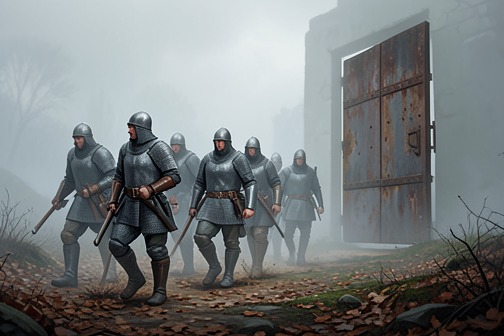
The French expedition to [Scotland](entity:location-recall-location-scotland-4e112aa71aa3) in 1385 was intended to pressure [England](entity:location-recall-location-england-b153c1f368ea) from the north by joining a French force to the Scots and ravaging English territory. Its failure to secure effective cooperation or lasting gains left its participants far worse off than its scale and ambitions had promised. For Jean de Carrouges, who joined in search of wealth and advancement, the campaign brought the rank he had long sought—but also depleted resources, lost comrades, and a serious illness.
## Strategic purpose and command
The expedition formed part of a wider effort to threaten England on two fronts. French forces sent to Scotland the previous year had burned and pillaged border districts, drawing Richard II and his troops north, away from London. A planned second invasion from the south was never launched, and the two-front strategy was abandoned. In 1385, Philip the Bold, Duke of Burgundy, proposed a more ambitious invasion, urging Charles VI to win lasting renown by striking England with overwhelming force. The Scottish campaign thus had a strategic purpose beyond its own raids: it was meant to help divert English attention while France prepared a broader offensive.
The king commissioned the expedition, placing it under Sir Jean de Vienne, a celebrated commander and admiral of France since 1373. Vienne had reorganized the navy and coastal defenses, led naval raids against the English, helped defeat Charles the Bad in 1378, and commanded the Cotentin campaign in 1379, where Jean de Carrouges had served under him. The admiral’s experience linked the Scottish venture to a longer series of French military operations, while Carrouges’s earlier service gave him a personal connection to its commander.
Carrouges had recently reconciled with Jacques Le Gris, but the settlement had not erased his setbacks at Count Pierre of Alençon’s court. He chose to leave [Normandy](entity:location-recall-location-normandy-76cf0439a8b3) and seek advancement abroad. A display of courage might earn him a knighthood; plunder from English towns and castles might compensate for land and income he had lost at home. Before he could go, he had to obtain release from his regular military service. Count Pierre readily granted it after years of quarrels with his vassal. The permission freed Carrouges for the campaign, while also removing him temporarily from the count’s court. The account suggests that the count may have hoped Carrouges would not return: still without an heir, the knight risked leaving lands that could revert to his lord.
## Mobilization and passage to Scotland
Vienne’s force included more than a thousand knights and squires, together with twice as many crossbowmen and armed servants, for a total of about three thousand men. Nobles came from across France. Carrouges joined with nine squires under his command, making his participation both a personal venture and a small unit within a much larger royal expedition.
The preparations reflected the intended scale and duration of the undertaking. In late April or early May, Carrouges and his men reached the port of [Sluys](entity:location-recall-location-sluys-068ef2a1fc83), where nearly two hundred ships were being loaded with weapons, armor, primitive cannons, and supplies intended to support as much as a year of campaigning. [Horses](entity:creature-recall-creature-horses-87908149ff0f) were carried for fighting, riding, and transporting baggage. The fleet also bore substantial gifts for the Scots: fifty suits of armor and 50,000 gold francs secured in chests. Before sailing, Vienne paid the army two months’ wages in advance. A muster on May 8 records Carrouges at Sluys with his nine squires and a payment of 320 livres, calculated at half a livre per man per day.
The fleet departed on May 20 in fair weather, sailing north along the Flemish coast before turning west for Scotland and the Firth of Forth. It put in at Leith, near Edinburgh. The French expected to join the Scots and march south together, but the reception exposed the limits of the alliance: Scots complained that they had not asked for the foreign army and could fight England themselves. King Robert also refused to march until he had received a large payment. Vienne accepted the demand because, without the king’s cooperation, the French had no effective allied force with which to proceed.
## March, siege, and retreat
The combined French and Scottish army, about five thousand strong, finally left Edinburgh in early July. It crossed the Tweed and moved east toward the sea, burning farms and villages as it went. The force halted at Wark, where [Castle Wark](entity:object-recall-object-castle-wark-a5b8f1424604) stood on a rocky outcrop above the river. The fortress was strongly defended: its four-storey keep had stone vaults and openings through which defenders could attack from above; ditches exposed assailants to fire from the walls; and Sir John Lussebourne had reinforced the garrison and installed heavy cannons. His household, including his wife and children, was inside.
Vienne sent a herald to demand the castle’s surrender. Lussebourne refused and warned the admiral against trusting the Scots. The assault began after this exchange. The campaign later included another unsuccessful attack: on September 7, French and Scottish troops brought ladders against a town’s walls but failed to take it by storm or destroy it. With the siege producing no decisive result, and the army deep in enemy territory, the invaders ended the attempt and turned north.
The withdrawal brought a further reversal. The retreating army, burdened by a large amount of plunder, was attacked at night by Sir Henry Percy, heir to the Earl of Northumberland and known as Hotspur for his speed and force on horseback. His attack killed many and put others to flight; twenty-six prominent prisoners were taken. Carrouges and Robert de Thibouville escaped capture and death, but the campaign’s muster on October 28 shows that Carrouges had lost five of the nine squires who had accompanied him. The record does not establish when or how all five were lost: some may have died in earlier fighting or from disease, while others may have fallen in Percy’s attack. The raid proved the campaign’s final battle.
## Costs and outcome
As the season for fighting ended, Vienne’s battered force wintered in Edinburgh. The French could scarcely obtain provisions even when they had money to pay, and shortages of food and drink harmed both men and horses. The French eventually secured passage home and returned through [Flanders](entity:location-recall-location-flanders-67d09b61ddb4) or other available ports, hungry and without many of the arms and horses they had brought. Some returning soldiers were so poor that they could not remount themselves and resorted to riding work animals.
Carrouges returned to Normandy late in 1385 with his health and finances badly damaged. He had spent heavily to equip himself, expecting plunder in gold, silver, horses, and other valuables; instead, the expedition yielded no comparable return. He came home with a chronic fever, weakness, and recurring shakes and sweats. He had also spent more than six months abroad and lost five comrades. His wages remained in arrears, further underlining the gap between the promised opportunity and the campaign’s material result.
The one substantial personal prize was the knighthood he had hoped to win. A review of the French army in late October lists him as Sir Jean de Carrouges, knight, confirming that he had attained the rank during the campaign. Nearly fifty, he had so far failed to obtain this distinction at Count Pierre of Alençon’s court. His new status entitled him to be addressed as a chevalier and doubled his daily pay to one livre, although he had not yet collected all that was owed. The expedition therefore ended in a stark imbalance: Carrouges gained rank, but not the wealth that had motivated his departure, and returned to Normandy diminished in health and resources.
The campaign also preceded another unrealized invasion scheme. In 1386, Charles VI approved a proposal for a still larger assault on England and prepared to travel to Sluys to lead an armada of more than a thousand ships. He vowed not to return to Paris before setting foot on English soil, but that southern invasion was never launched. Set beside the Scottish expedition, the later plan underscores how the French strategy repeatedly reached the level of grand mobilization and royal commitment without producing the intended invasion of England.
Event 17
French invasion plan of England (1386)
The [French invasion plan of England (1386)](entity:event-recall-event-french-invasion-plan-of-f30de7ad22ee) was an ambitious royal campaign that turned a local judicial case into part of a wider season of military preparation. Proposed by Philip the Bold and approved by the young Charles VI, it envisioned an armada of more than a thousand ships and a direct assault on [England](entity:location-recall-location-england-b153c1f368ea). The king set out to lead the expedition himself, but violent weather halted the enterprise. Its interruption also shaped the timetable of the [Parlement of Paris](entity:organization-recall-organization-parlement-of-par-166ec083cfce)’s inquiry into the Carrouges–Le Gris case and the duel that followed.
## Background and Strategic Ambition
The plan emerged in August 1386, when the Parlement’s inquiry into the dispute between Jean de Carrouges and Jacques Le Gris had entered its second month. During July, Charles VI and the [French royal court](entity:organization-recall-organization-french-royal-cou-79c27418d9e1) had followed the quarrel closely. By August, however, royal attention shifted from domestic affairs and the prospect of a duel to the renewed threat of war with England. Summer weather had again opened a military window, and hostilities appeared imminent.
The campaign followed an inconclusive effort the previous year. Charles had sent Admiral Jean de Vienne to [Scotland](entity:location-recall-location-scotland-4e112aa71aa3) with a French army that included Jean de Carrouges. The expedition had burned and pillaged across the border counties, drawing Richard II and his forces north, away from London. A second French invasion from the south, which would have made the English face attacks on two fronts, never took place; the original two-pronged plan was abandoned. In 1386, Philip the Bold proposed a larger and more devastating undertaking, presenting it as a means for Charles to win lasting renown and deal England a decisive blow.
The proposal was not simply a continuation of the Scottish expedition. The previous year’s campaign had drawn English forces toward the northern border, while the new scheme called for a huge invasion force and a fleet capable of carrying it across the Channel. The book describes the proposed operation at its intended scale, but does not provide a detailed account of its military design, provisioning, or precise landing arrangements. Its central political feature is clearer: Philip advanced the plan, and the king himself was to take command.
## Royal Commitment and Preparations
Charles, still young and impressionable, approved Philip’s proposal at once. He prepared to leave Paris for [Sluys](entity:location-recall-location-sluys-068ef2a1fc83), the Flemish port where he would take his place at the head of the invasion force and an armada of more than a thousand ships. Before departing, he attended a solemn mass at [Notre-Dame Cathedral](entity:object-recall-object-a6d17e027170) and vowed not to return to Paris before setting foot on English soil. The vow made the expedition a personal undertaking as well as a royal military project: the king’s anticipated return depended on success across the sea.
His departure also shifted the balance of attention in Paris. The Parlement continued its proceedings after the king and his uncles left, including the inquiry into the Carrouges–Le Gris affair. The knight and the squire remained in the city, free to move about but obliged to appear before the court whenever summoned. Their case did not stop; rather, it proceeded while the sovereign who had followed it closely pursued a much larger campaign.
By mid-September, Charles and his uncles were on the Flemish coast assembling the armada. The king was in Arras, travelling toward Sluys, when he learned that the Parlement had ordered Jean de Carrouges and Jacques Le Gris to fight and set their duel for late November. The date lay more than two months ahead, beyond the triumphant return Charles expected from England. The proposed invasion therefore affected the legal case not only as a rival demand on royal attention, but as a campaign whose anticipated timetable left the king expecting to be absent when the duel was due to take place.
## Weather, Portents, and Cancellation
The expedition never sailed for England. Violent thunderstorms delayed the preparations and sank many ships. The same storms uprooted large trees and killed people and animals with lightning. The narrative also records reports treated as strange portents: at Plaisance, lightning struck a church, burned its wooden furnishings and sacred vessels, while fragments of the consecrated host were said to remain untouched. Near Laon, flocks of crows reportedly carried burning coals to grain-filled farm buildings, which caught fire and burned. These episodes belong to the contemporary atmosphere of ominous signs surrounding the stalled campaign; the account gives them as reports, not as an explanation of the storms.
Faced with the weather and the delays, Charles and his uncles called off the invasion until the following year. The proposed assault thus ended in postponement rather than a crossing to England. The armada’s great scale and the king’s vow stand in sharp contrast to the outcome: a campaign announced as a potential blow against England was checked before it began, by conditions that disrupted the fleet and undermined the schedule on which the royal undertaking depended.
## Effects on the Parlement and the Duel
Although the inquiry continued during the king’s absence, Charles’s expectation that he would return in triumph did not survive the failed timetable. By mid-November he was preparing to leave for Paris and was eager to witness the combat. Concerned that another delay might keep him from it, he consulted his uncles, the dukes of Berry, Burgundy, and Bourbon, who also wished to see the duel. Less than a week before the scheduled date, the king sent sealed letters back to Paris ordering that the combat be postponed until after his return.
The Parlement convened on November 24, three days before the duel was to occur, and complied with the king’s request. It rescheduled the combat for December 29. The invasion plan did not determine the merits of the accusation or the court’s decision to authorize a duel; its failure altered the king’s movements and, in turn, the date on which the combat could proceed. The postponement prolonged the wait for Jean de Carrouges, Jacques Le Gris, and Marguerite de Carrouges, while the king’s unrealized English campaign became part of the immediate background to the final proceedings.
Event 18
Marriage of Charles VI of France and Isabeau of Bavaria
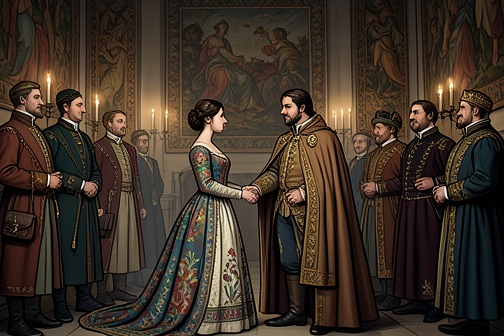
The [Marriage of Charles VI of France and Isabeau of Bavaria](entity:event-recall-event-marriage-of-charles-vi-23d87c42a65f) began as a dynastic arrangement between two ruling families and became, to the surprise of the French court, a love match. Their wedding took place on July 17, 1385, only four days after they met. The rapid marriage joined a carefully negotiated political alliance to a royal couple whose first child, born the following year, became the focus of dynastic hopes.
## A Match Made for Alliance
The marriage negotiations were driven by political calculation. Charles’s ambitious uncles sought an ally in Isabeau’s father, Duke Stephen of Bavaria, while Stephen welcomed an alliance with the French royal house. The prospective bride and groom were therefore bound together first by the interests of their families, rather than by a prior personal relationship. The match belonged to a familiar dynastic logic: marriage could connect courts and strengthen political ties, while the couple’s own feelings remained uncertain.
That uncertainty was reinforced by the customs surrounding the selection of a queen. Before Isabeau met Charles, and even before he knew she was being considered as his bride, three French duchesses examined her unclothed. The inspection was intended to establish whether she was considered physically capable of bearing children. Isabeau accepted the examination with good grace and passed it. The episode shows how the royal marriage treated a prospective queen’s capacity to produce heirs as a matter of dynastic concern, assessed by the court before the couple had even been introduced.
## Meeting and Wedding
Soon afterward, Isabeau was presented to Charles, dressed in splendid clothing and jewelry. The two could scarcely speak to one another: Charles knew no German, while Isabeau knew very little French. Yet the meeting was described as an immediate emotional turning point. Charles took her by the hand, raised her from her curtsy, and looked at her intently; the account presents love and delight as entering his heart. The court watched his reaction, and a constable remarked that Isabeau would remain with them because Charles could not take his eyes off her.
Charles insisted on an immediate wedding. The ceremony followed on July 17, four days after their first meeting. Isabeau arrived in a magnificently appointed carriage, wearing a crown Charles had sent her, described as being worth a king’s ransom. The bishop of Amiens solemnized the high mass and marriage vows before a multitude of noble guests. Afterward, counts and barons served the couple at a lavish feast, bringing delicacies to the royal table on golden platters. That evening, court ladies put the bride to bed, and Charles joined her. The wedding thus moved swiftly from formal presentation to public ceremony and royal celebration, making visible both the alliance arranged by the families and the attraction reported between the couple.
## An Heir and the Stakes of Marriage
By January 1386, Isabeau was pregnant, and news that a royal heir was expected circulated through the court. On September 25, she gave birth to a son. Bells rang across Paris, a courier carried the news to Charles, and the child was christened Charles on October 17 by the archbishop of Rouen. The sequence gave the marriage a dynastic consequence within little more than a year: the alliance had produced a prince who could be presented as the future of the royal line.
The birth also illuminates the importance attached to fertility in the marriage’s beginnings. Isabeau’s examination before her introduction to Charles had made childbearing an explicit concern; pregnancy and the birth of a son then turned that concern into public news. The court’s interest was not only personal. The arrival of a male heir carried significance for the royal family and the kingdom, and the bells and courier made the announcement a public event rather than a private family moment.
The prince, however, was sickly. He languished in his infant bed while Isabeau worried over him during Charles’s absence and the court physicians watched his condition worsen. When Charles returned to Paris in early December, the child was weaker still. He died on December 28, 1386, the [Feast of the Holy Innocents](entity:time-recall-time-feast-of-the-holy-innoce-634c64310d90), and his death was mourned by the court, the city, and the nation. His richly clothed body was carried by torchlight to the royal sepulchre at [Saint-Denis](entity:location-recall-location-saint-denis-91ae1e7341eb). The brief life of the heir sharply altered the promise attached to the wedding: within months of the court’s celebration of his birth, the royal line had lost the son it had welcomed.
## Significance in the Narrative
The marriage’s account turns on a contrast between political arrangement and personal response. The alliance was negotiated by families pursuing their interests; the meeting, by contrast, was represented as an immediate romantic attachment, followed almost at once by Charles’s insistence on marriage. At the same time, the court’s scrutiny of Isabeau and its attention to her pregnancy show that a royal marriage was also an institution of succession. Personal feeling and dynastic purpose were not alternatives in this account: the wedding was celebrated as a love match, while the production of an heir remained central to its public meaning.
The marriage also establishes the royal family’s changing circumstances in the period surrounding the Carrouges–Le Gris affair. By the time the dispute reached the royal court in 1386, Charles and Isabeau had a young son, whose birth had briefly embodied the promise of continuity. The prince’s death on the eve of the duel between Jean de Carrouges and Jacques Le Gris placed public grief beside the impending judicial combat. The wedding itself did not settle that dispute, but its aftermath forms part of the royal and courtly world in which the case unfolded: a political alliance had become an intimate partnership, produced an heir, and then suffered a sudden loss.
Event 19
Charles VI’s first episode of insanity
[Charles VI’s first episode of insanity](entity:event-recall-event-charles-vi-s-first-epis-db003287735a) occurred on August 8, 1392, during a military expedition near [Le Mans](entity:location-recall-location-le-mans-a3a67ab88386). A stranger’s warning, an accidental noise, and the king’s sudden misrecognition of those around him turned a royal procession into a crisis: Charles attacked members of his own entourage and pursued his brother. The episode was the first public sign of an illness that would repeatedly interrupt his rule, and it swiftly shifted power back to the relatives from whose control he had only recently emerged.
## Setting and Warning
The king’s army was passing through a large forest near Le Mans in hot, dry weather when a bare-headed man in a smock ran into the road and seized Charles’s horse by the bridle. The stranger warned him not to go farther and urged him to turn back because, he claimed, the king had been betrayed. Charles’s attendants treated the man as mad and beat him; once he let go of the reins, the procession continued. The warning thus entered the episode as an unresolved alarm: it did not stop the army, but it remained in the account as part of the circumstances surrounding what followed.
Around noon, the army left the forest and crossed a broad sandy plain. The great lords rode in separate companies. Charles kept to one side to avoid the dust, while his uncles, the dukes of Berry and Burgundy, rode about a hundred yards to his left. The king wore a black velvet jerkin and a plain scarlet hat, while pages followed behind him: one wore a polished steel helmet, and another carried a lance with a broad steel head. These details establish the close order of the royal party and the immediate setting for the accident that precipitated the crisis.
## The Episode
At some point on the plain, the second page accidentally dropped his lance, which struck the helmet of the page ahead. The sudden clang startled Charles. The account links his reaction to the stranger’s warning in the forest: his thoughts were still occupied by the possibility of betrayal, and he imagined that enemies were approaching to kill him. The narrative presents the lance’s impact not as an attack but as an accidental event interpreted through the king’s growing delusion.
Charles spurred his horse forward, drew his sword, and wheeled toward the pages. He no longer recognized them or the other people around him, and acted as though he were surrounded by enemies in battle. The pages turned their horses aside to escape him. In the confusion, Charles killed several men in his entourage. The episode therefore moved from a sudden misreading of a sound to a direct danger to the people accompanying the king, although the account does not describe the individual victims or the precise circumstances of their deaths.
The king then saw his brother, Louis of Valois, and rode after him with his sword raised. Louis escaped by galloping away. The dukes of Burgundy and Berry, alerted by the commotion, recognized the gravity of what was happening and called for the king to be caught. Their response brought the royal party’s leaders into the crisis: the uncles who had recently lost control of Charles now had to manage a king who could not recognize even his own family.
## Restraint and Immediate Consequences
Louis eventually outdistanced Charles, and men-at-arms caught up with the king and formed a circle around him. They parried his blows while taking care not to injure him, allowing him to tire. When he had exhausted himself, a knight quietly approached from behind and pinned him. The others took away his sword, lifted him from his horse, and laid him on the ground. Charles did not speak and failed to recognize his uncles or his brother. The account describes his eyes as moving strangely, but gives no further explanation of his condition at that moment.
The king was carried back to Le Mans in a litter, and the military expedition was immediately called off. The decision marked the practical consequence of the episode: the campaign could not continue once the ruler at its center was incapacitated. The narrative’s sequence also gives the crisis a clear reversal. The army had proceeded despite the warning; after the king’s attack on his own entourage, the expedition ended and the king himself had to be transported back.
## Significance for the Reign
This was the first public display of the madness that would affect Charles for the remainder of his long reign, which lasted until his death in 1422. He alternated between periods of lucidity, when he seemed normal, and bouts of debilitating insanity. The account also notes his sensitivity to bright light and loud noises and his recurring fear that he was so brittle he might break like glass. Those later characteristics place the Le Mans episode within a longer pattern, but do not establish a simple medical explanation for its immediate trigger.
Its political consequence was immediate. Charles had only recently shaken off the control of his uncles and declared himself sole ruler of France. After the episode, he was unable to govern himself, much less the kingdom, and power passed back to his uncles and Louis of Valois—the brother who had just escaped the king’s pursuit. The event thus turned a personal crisis into a reversal in government: the king’s claim to rule independently could not be sustained when his capacity to act as ruler became uncertain. The opening warning, the accidental clang, and the mistaken identification of companions as enemies make the episode a stark account of how quickly the authority concentrated in the king could be disrupted.
Event 20
Bal des Ardents
The [Bal des Ardents](entity:event-recall-event-bal-des-ardents-9bd7f9b5420d) was a court entertainment that became a fatal fire and a turning point in the account of Charles VI’s declining mental health. A prank intended to lift the king’s spirits instead killed four young nobles and, according to the book, worsened the king’s dementia.
## A Revel Meant to Cheer the King
The event took place within a year of Charles VI’s first public display of madness, after he had been carried away from a military expedition. The king’s friends sought to distract him from his melancholia with an elaborate performance: Charles and five young nobles entered a crowded ballroom chained together and disguised as wild men in linen costumes covered with pitch and flax.
The masquerade depended on a striking transformation of the participants into a collective spectacle. Their costumes and chains made the six men appear as a group, while the disguise was intended as a prank to raise the king’s spirits. The gathering’s festive purpose, however, left little margin for safety around the highly flammable materials.
## The Fire and the King’s Escape
An excited guest brought a candle too close while trying to identify the disguised figures. The costumes caught fire. Four of the young nobles died; one escaped by plunging into a nearby tub of water.
Charles also survived, but by circumstance rather than by the plan of the revel. He had stepped away to show himself to the ladies when the costumes ignited. The Duchess of Berry acted quickly, throwing her skirts around the king to keep the flames from reaching him. The account distinguishes his narrow escape from the deaths of his companions without describing the scene in graphic detail.
## Aftermath and Significance
Known as the Bal des Ardents, the evening shattered what remained of Charles’s nerves and appeared to worsen his dementia. Its consequence therefore extended beyond the immediate deaths: the attempted diversion of a vulnerable king became another event associated with his deteriorating ability to govern himself.
The episode turns on a sharp reversal. A court spectacle designed to restore the king’s spirits instead became a public disaster, and the disguise that bound the performers together also exposed them to a shared danger. Charles survived because he had moved away from the group; his companions’ deaths and the intervention that saved him made the revel a grim episode in the story of his reign.
Event 21
Battle of Nicopolis
The [Battle of Nicopolis](entity:event-recall-event-battle-of-nicopolis-49e4dd92fbe8) was the decisive defeat of a European crusading army by Sultan Bayezid’s Ottoman forces in September 1396. A campaign marked by divided leadership and uncertain plans ended in disaster when the French and Burgundian vanguard attacked before the allied lines were ready. The battle’s consequences reached beyond the loss of an army: it probably cost Jean de Carrouges his life, though the surviving account cannot establish how he died.
## The Crusade and Its Route
Jean de Carrouges joined a crusade that drew nobles and knights from across Europe. The Burgundian contingent was led by Jean of Nevers, son of Duke Philip. Among the French commanders were Marshal Boucicaut, who had previously traveled with Carrouges in Turkey and Greece; Philip of Artois, Count of Eu, who had served as one of Jacques Le Gris’s pledges; and Admiral Jean de Vienne, Carrouges’s former commander. Carrouges had fought alongside de Vienne against the English in [Normandy](entity:location-recall-location-normandy-76cf0439a8b3) nearly twenty years earlier and had joined him on the ill-fated Scottish expedition of 1385. [Nicopolis](entity:location-recall-location-nicopolis-3e42ae28d7b8) was their third campaign together.
Some leaders entertained the prospect of marching as far as Jerusalem, but the coalition never settled on a clear common plan. The French and Burgundian forces assembled at Dijon in late April 1396 and received four months’ wages in advance. They marched east through Switzerland, Bavaria, Austria, and Hungary, joining other crusaders at Budapest, including King Sigismund of Germany and Hungary. From there, the army divided: some proceeded south through the Balkans along the [Danube](entity:location-recall-location-danube-bac3554d019b), with supply ships following the river, while others took a more direct overland route north of it, passing Belgrade and Orsova.
The forces met again at Vidin in early September, besieged the town, and captured it. Its entire garrison was put to the sword. Short of supplies as they continued east, the crusaders attacked and plundered other towns. On September 12 they reached Nicopolis, a strongly defended city on a high bluff above the Danube. Their first attempt to take it, using mines and scaling ladders, failed because they lacked siege engines.
## Bayezid’s Approach and the Crusader Advance
Bayezid had been besieging Constantinople, about three hundred miles away. On learning of the Christian attack, he abandoned that siege and marched north at speed. His army joined its Serbian allies at Kazanlak around September 20 and reached Nicopolis four days later. By night, messengers were sent to the city to urge its defenders to hold out, since relief had arrived.
Bayezid did not rush to attack. He selected ground on a ridge a few miles south of Nicopolis, behind a narrow wooded ravine, and ordered his troops to plant dense rows of sharp wooden stakes. The crusaders were caught between the city and the approaching Ottoman army. Having taken thousands of prisoners during their raids, and fearing an effort by the city’s defenders to free them, the crusaders massacred their captives and left the bodies unburied as they prepared to fight.
On Monday morning, September 25, the crusaders rode out to meet Bayezid. The French and Burgundians refused to march behind Sigismund’s forces, whom they considered peasants, and insisted on leading the attack. Sigismund yielded but warned them not to get too far ahead or abandon a sound defensive position in their haste. As the lines were still forming, the Count of Eu seized a banner and urged the troops forward. When Jean de Vienne and other French commanders asked him to wait until the army was ready, the count accused them of cowardice. The premature attack began.
## The Battle and Its Reversal
The French heavy cavalry charged downhill into the wooded ravine as mounted Ottoman archers sent a hail of arrows from the ridge above. At the dry streambed, the crusaders had to climb the opposite slope; some did so on foot after being unhorsed, while others dismounted where the incline was too steep for their horses. Many nevertheless reached the top. Their plate armor turned aside most arrows, but the withdrawing archers revealed the rows of stakes protecting the Ottoman infantry.
The crusaders pulled up stakes to open a way through. Once they broke the defenses, the knights killed or routed most of the lightly armed infantry. They were preparing to pursue when Ottoman cavalry swept in. In the fighting that followed, French knights fought on foot and used daggers against enemy horses. Both sides suffered losses, and the Ottoman cavalry eventually withdrew. Believing they had prevailed, the crusaders rested, exhausted by the climb, the fighting, and the effort to breach the stakes.
That pause proved fatal. A reserve cavalry force, hidden behind trees, charged into the weary crusaders. Some were killed in the first assault; others retreated down the slope they had just climbed and fled toward the city, with some crossing the Danube to escape. Those who remained continued fighting amid mounting losses. Jean de Vienne fell with the banner of the Virgin still in his hand. Sigismund’s forces, which had followed the Franco-Burgundian charge, were cut to pieces.
## Defeat, Captivity, and Carrouges’s Fate
Overwhelmed, many crusaders who had held their ground surrendered. The captives included Boucicaut and the Count of Eu, the leader whose premature advance had started the French attack. The Ottomans took as many as three thousand prisoners. Some high-ranking and wealthy captives were later ransomed, including Boucicaut and Jean of Nevers. But on the day after the battle, the Ottomans beheaded several hundred crusaders in retaliation for the massacre of their prisoners. Bayezid, sickened by the slaughter, eventually ordered it stopped.
The record does not say what happened to Carrouges. The account considers it likely that he died fighting near Jean de Vienne and was buried with him in a mass grave. It also leaves open the possibility that he was among the prisoners executed the next day. His bravery, ferocity, and loyalty to his comrades make it unlikely that he fled, but these qualities cannot establish his precise end. A later note adds that his three reported companions at Nicopolis also died, as did his old commander de Vienne, lending weight to the likelihood that Carrouges perished there without resolving the uncertainty.
The defeat is presented as one of the great military disasters of its age and as the end of three centuries of European military adventures in the East. For the history of Carrouges, the battle also marks a final separation: his departure on crusade left Marguerite without her defender, and news of his death, when it reached her, would leave her permanently without a champion. The account gives no certainty about the manner or date of his death; the campaign’s ending is known, but Carrouges’s individual fate remains unresolved.
Event 22
Anglo-French peace of 1396
The [Anglo-French peace of 1396](entity:event-recall-event-anglo-french-peace-of-1-ca0afb80aa9d) was a diplomatic settlement between France and [England](entity:location-recall-location-england-b153c1f368ea), reinforced by a royal marriage and accompanied by an alliance for a crusade against the Turks. It marked a striking turn from prolonged conflict toward cooperation, though the personal and political promises attached to it proved fragile.
## Background and Calls for Peace
France and England were engaged in peace talks, urged on by Robert the Hermit, a Norman squire who said he had received a vision during a storm at sea while returning from Palestine. He visited both royal courts to convey that God wanted the kings to end their lengthy war and heal the schism in the church. The account sets this religious appeal alongside a practical pressure: the growing Ottoman threat was also drawing the kingdoms closer.
## Marriage and Alliance
In March 1396, the two kingdoms cemented a twenty-eight-year peace through a royal marriage between Richard II and Isabelle, the daughter of Charles VI. The match joined a twenty-nine-year-old king to a six-year-old princess. The book underscores the disparity rather than presenting the marriage as a partnership between equals: Richard and Isabelle would never consummate it.
By the time of the betrothal, France and England had also allied themselves in a great crusade intended to save Christendom from the Turks. The peace therefore did not simply suspend hostilities; it redirected cooperation toward a shared military and religious cause.
## Limits and Aftermath
The marriage did not secure a lasting personal bond or an uncomplicated political future. Richard was deposed just three years later, and the royal couple’s marriage remained unconsummated. Those outcomes stand in tension with the settlement’s twenty-eight-year term and its promise of a durable rapprochement.
The peace appears in the narrative as an unusual convergence of religious exhortation, dynastic arrangement, and strategic necessity. Robert the Hermit’s message framed peace as a divine demand, while the Ottoman threat gave the kingdoms a shared reason to act. Yet the very marriage chosen to embody that accord joined a grown king and a child, making visible the distance between the agreement’s grand political design and the lives bound to it.
Event 23
Marguerite de Thibouville’s alleged rape

[Marguerite de Thibouville’s alleged rape](entity:event-recall-event-marguerite-de-thibouvil-6141b4ae5cbc) on January 18, 1386, became the defining accusation in the case against Jacques Le Gris and ultimately helped bring about the judicial duel between Le Gris and Jean de Carrouges. The event was not preserved through a surviving transcript of Marguerite’s spoken testimony: its details are known principally through a court summary, later legal notes, and competing accounts whose uncertainties endured long after the proceedings ended.
## Circumstances and Stakes
The alleged assault took place at [Château de Capomesnil](entity:object-recall-object-ch-teau-de-capomesnil-533c95ca62cf) while Jean de Carrouges was away on business in Paris. In the account Marguerite later gave under oath, she identified Jacques Le Gris and Adam Louvel as the two men involved. She said she saw them in daylight, that Louvel named Le Gris before Le Gris appeared a few minutes later, and that she spoke with both before the attack. The case records preserve this as her accusation, not as an independently witnessed account of what happened inside the castle.
The accusation carried exceptional personal risk in a society that prized a noble wife’s chastity as a guarantee of legitimate inheritance. Jean was substantially older than Marguerite, and the marriage was expected to produce legitimate heirs; the prevailing double standard demanded strict sexual fidelity from wives even as noblemen took liberties elsewhere. Her family history heightened the danger of public disgrace: her father, Robert de Thibouville, had twice betrayed the kings of France, leaving the family under suspicion. The accusation therefore exposed Marguerite not only to scrutiny of her conduct but also to the old stigma attached to her name.
Jacques Le Gris warned Marguerite that disclosure could bring further shame and that her husband might kill her rather than believe her. The threat drew force from the risks the account describes: Jean was jealous and suspicious, and husbands could sometimes escape punishment for killing wives they accused of adultery. Le Gris knew Jean from their long acquaintance at the court of Argentan and may have been exploiting both the husband’s temperament and Marguerite’s vulnerability. The narrative presents that calculation as a possibility, not an established motive.
## Disclosure and Testimony
Marguerite did not tell her mother-in-law, who had returned from a brief journey to [Saint-Pierre-sur-Dives](entity:location-recall-location-saint-pierre-sur-div-0fc3d6f64daf) on the day of the attack. She remained silent until Jean returned from Paris, probably on January 21 or 22. In the meantime, she committed the day and time of Le Gris’s visit to memory, preparing for the questions she expected from her family and for the public ordeal that might follow. Her silence thus lasted only a few days; it did not become the permanent submission Le Gris’s warning appears to have sought.
When the [Parlement of Paris](entity:organization-recall-organization-parlement-of-par-166ec083cfce) opened its inquiry, Marguerite was its chief witness. Although women could not bring criminal charges on their own, the official record states that information was received through her deposition or oath, and that court officers questioned and examined her closely and repeatedly. A remark in Le Gris’s testimony indicates that she appeared before the king and the assembled Parlement near the beginning of the inquiry before being questioned privately. By mid-July she was already six months pregnant, making that public appearance more difficult; as the case continued into late summer, she was at least eight months pregnant and faced the strain of waiting in unfamiliar surroundings.
The knight, the squire, and Marguerite gave their testimony in Norman French, but no transcript of their spoken evidence survives. A professional scribe rendered the case into Latin in a detailed summary of nearly ten folio-sized pages, setting out Jean’s charges, based on his wife’s sworn account, alongside Le Gris’s lengthy defense. That surviving document records the proceedings through the language of the court rather than preserving Marguerite’s own words verbatim.
## From Inquiry to Judicial Duel
The accusation entered a system in which proof was difficult and the parties did not meet on equal ground. Le Gris was a favorite of Count Pierre of Alençon and was well regarded at the royal court in Paris. As a cleric in minor orders, he could also claim benefit of clergy and seek transfer to a church court. Marguerite, by contrast, was the wife of one of Count Pierre’s troublesome vassals and the daughter of a man already marked by treason. These conditions made the prospect of a straightforward hearing uncertain even before the evidence was weighed.
Jean’s appeal turned the accusation into a prolonged public legal contest. After the inquiry, the Parlement authorized a judicial duel between Jean de Carrouges and Jacques Le Gris at [Saint-Martin’s dueling ground](entity:object-recall-object-f44c8a32d1fe). The combat was meant to resolve the charge through a result that the legal culture treated as judgment, although the procedure could not recover direct proof of the alleged assault. Its formal equality was carefully staged: because Jean was a knight and Le Gris only a squire, Le Gris was knighted before the fight. Their actual circumstances remained unequal in other respects, including experience, strength, wealth, equipment, and health.
The duel’s rules reveal how far the dispute had moved from testimony to bodily contest. It was no tournament: once combat began, the fighters could use any means to defeat one another, without the restraints associated with chivalric sport. The outcome was supposed to settle guilt, but it could not make the underlying event directly observable. The accusation thus passed from Marguerite’s sworn account, through a written inquiry, into a public trial by combat whose verdict depended on what happened between two armed men.
## Uncertainty and Afterlife
Marguerite’s testimony remained firm during the proceedings. In his diary, Jean Le Coq, Le Gris’s lawyer, counted against his client the fact that Carrouges’s wife never relented in affirming that the deed had occurred. Le Coq also recorded arguments for Le Gris, including knights’ claims that they had seen him with Count Pierre throughout the day. He noted the suggestion that Le Gris might have refused to confess because of the scandal confession would cause among his sons and friends, particularly after Count Pierre had declared him innocent. Yet the lawyer’s final assessment acknowledged the limits of what even a close observer could know: no one really knew the truth of the matter.
The uncertainty continued into later historical memory. Jean Froissart, writing within a few years of the duel, said that the king, court, and crowd rejoiced at its outcome; Le Coq recorded divided reactions, with some seeing Jean vindicated and others believing Le Gris unjustly killed. The [Saint-Denis](entity:location-recall-location-saint-denis-91ae1e7341eb) Chronicle later claimed that Marguerite had accused Le Gris mistakenly but in good faith and that another felon eventually confessed. A version of that story persisted in later chronicles and became a legend of false accusation, wrongful death, and delayed revelation.
The book challenges that legend without claiming that the record can settle every question. Marguerite’s identification of two alleged attackers, including her account that Louvel named Le Gris before he appeared, makes mistaken identity less plausible in the author’s assessment; naming Louvel also complicated the theory that she deliberately fabricated the accusation, since adding another alleged participant increased the burden of proof. Nevertheless, later writers repeatedly recast the affair as a miscarriage of justice. In the eighteenth century, [Enlightenment](entity:time-recall-time-enlightenment-095445f067b9) commentators used the story to condemn judicial combat, and the accusation’s long afterlife became inseparable from the unresolved question it had first put before the court.
Event 24
Jean de Carrouges’s appeal before the Parlement of Paris
[Jean de Carrouges’s appeal before the Parlement of Paris](entity:event-recall-event-jean-de-carrouges-s-app-0c0d80f43bad) transformed a private quarrel into a test of royal justice. By invoking a legal right to challenge his opponent to trial by combat, Carrouges placed his case before the king and helped produce the last judicial duel authorized by the [Parlement of Paris](entity:organization-recall-organization-parlement-of-par-166ec083cfce). The appeal’s significance lay not only in the violence it set in motion, but in the way it joined legal procedure, royal authority, and a public claim that God would disclose the truth.
## The Appeal as a Legal Remedy
When Carrouges came to Paris to present his case to the king, he intended to make an unusual appeal. French law allowed a nobleman dissatisfied with a judgment to challenge his opponent to judicial combat. This was not a private duel over an insult: it was a formal legal procedure for deciding which party had sworn falsely. The combat’s result was understood as a judgment of God, with divine will determining the truth.
The remedy had a long history, especially in [Normandy](entity:location-recall-location-normandy-76cf0439a8b3), but its availability had narrowed over time. Popes condemned judicial combat as an attempt to test God, while kings resisted a practice that could limit their authority over justice. In 1258, Louis IX removed duels from French civil law and substituted the enquête, a formal inquiry based on evidence and testimony. Judicial combat remained a possible last resort in certain criminal appeals by noblemen. Philip IV prohibited it in wartime in 1296 and in peacetime in 1303, then restored it in 1306 for specified criminal cases, including rape, under the king’s direct jurisdiction. Carrouges’s appeal therefore invoked a remedy that survived as a restricted royal exception, not an ordinary means of settling disputes.
## From Petition to Royal Decision
The appeal brought Carrouges’s claim into a system in which the king and the Parlement of Paris were central. The surviving references to the case identify lawyers acting for Carrouges, the Parlement’s role in appeals, and a royal communication to the court. The Parlement considered the matter at a session on July 9, 1386; its resulting authorization named pledges who would stand with the combatants. The decision converted Carrouges’s challenge from a proposed contest into a proceeding conducted in the king’s name.
That royal authority shaped the event that followed. The king was not simply a prominent observer: he presided over the duel by law, after the Parlement had authorized it in his name. Charles VI had postponed the combat for a month so he could attend after returning from [Flanders](entity:location-recall-location-flanders-67d09b61ddb4), and insisted that proceedings wait until he arrived. In a procedure presented as a divine verdict, the timing and legitimacy of the judgment were thus also controlled by the crown.
## The Appeal’s Public Consequence
The court’s decision culminated in a carefully organized public event at Saint-Martin’s field. Thousands came to watch: most were commoners from Paris and its suburbs, while nobles, members of the royal court, and visitors from distant regions occupied assigned stands. Carrouges arrived first, accompanied by pledges, relatives, and attendants carrying his equipment. Marguerite arrived in a black robe and a black-draped carriage; she had recently been confined after childbirth. The crowd’s attention fixed on her as the accuser, though she had not been legally condemned. If her husband died, she faced execution.
The ceremony made the court’s decision visible and enforceable. Officials examined the weapons, and a herald proclaimed rules backed by severe penalties: spectators were not to carry weapons, obstruct others’ view, or speak during the combat. The enforced silence distinguished judicial combat from a noisy entertainment. It also made the crowd part of the proceeding: thousands watched under royal discipline, then answered together when Carrouges, after the fight, asked whether he had done his duty. Their affirmation marked the moment the public learned that the contest had been decided, though not everyone beyond the field yet knew which man had won.
## Legal and Historical Aftermath
The appeal’s outcome did not resolve the underlying question of what had happened. The account records enduring disagreement: some chroniclers and later historians doubted Marguerite’s testimony, while others accepted it, and the truth remains uncertain. Nor did the duel’s result settle its legitimacy. The descendants of Le Gris continued for centuries to protest the outcome as a miscarriage of justice.
The proceeding nevertheless marked a historical endpoint for the Parlement of Paris. The fight between Carrouges and Le Gris was the last judicial duel it sanctioned. Later petitions for trial by combat came before the Parlement, but none resulted in authorization. Duels continued in parts of France outside its jurisdiction and elsewhere in Europe, so the practice did not disappear at once. The appeal’s lasting consequence was narrower but decisive: it produced the final duel approved by this court and left a controversial public verdict at the boundary between divine judgment and royal justice.
Event 25
Carrouges–Le Gris judicial duel
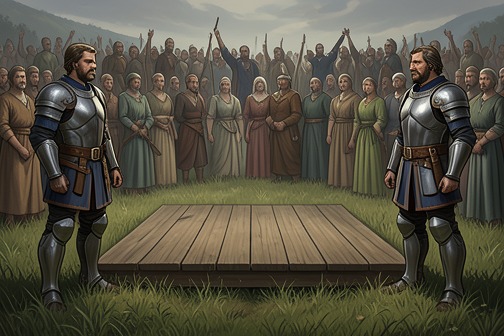
The [Carrouges–Le Gris judicial duel](entity:event-recall-event-carrouges-le-gris-judic-4ebe60a9915c), fought in Paris on [29 December 1386](entity:time-recall-time-29-december-1386-0f9cae17e1bc), was the final judicial combat authorized by the [Parlement of Paris](entity:organization-recall-organization-parlement-of-par-166ec083cfce). Its result would decide not only the fate of Jean de Carrouges and Jacques Le Gris but also whether Marguerite de Carrouges lived: she was present under sentence of death if her husband lost. The duel’s carefully staged public ceremony made the law’s unresolved accusation visible as a contest of bodies, procedure, and royal authority.
## The Public Stage
As the date approached, [Saint-Martin’s dueling ground](entity:object-recall-object-f44c8a32d1fe) was prepared for thousands of spectators. Most were commoners from Paris and its suburbs, gathered on the ground around the field; nobles, members of the [French royal court](entity:organization-recall-organization-french-royal-cou-79c27418d9e1), and visitors from distant regions and foreign courts were provided with more comfortable places. The arrangements made social rank part of the spectacle. The central stand was reserved for the king, his uncles, and the highest nobility; another held other members of the court, while a third seated foreign nobles according to rank. Ladies had separate stands from which they could withdraw, and lower stands were assigned to burghers and merchants. Many commoners watched through gaps in the tall timber fence.
The field’s construction also served the demands of supervision and control. Officials could observe from wooden towers at its four corners, close enough to see and hear the combat, and food and drink could be supplied to the fighters from there. A lower outer wall, with two entrances barred by heavy sliding gates, was to be guarded during the duel so the crowd could not press against the inner fence or disrupt the proceedings. The enclosure separated the combatants from spectators while placing thousands of witnesses around the contest.
The king’s presence shaped the timing and meaning of the event. Charles VI, legally the presiding judge, had postponed the duel for a month so he could attend after returning from [Flanders](entity:location-recall-location-flanders-67d09b61ddb4); he also ordered that the ceremonies wait until he arrived. Only when he took his place in the royal stand, on a coal-warmed, cushioned throne draped in royal blue and embroidered with golden fleurs-de-lis, did the combat’s formal proceedings begin.
## Arrivals and the Ritual of Equality
Jean de Carrouges arrived first, riding at the head of a procession of pledges and relatives, with squires and attendants carrying the equipment for combat. The rules prescribed that he enter on a palfrey, visor open, sword and dagger at his belt, while a page led his saddled and armored warhorse and other servants carried his lance and shield. He also bore a three-foot blue pole topped with a silver crucifix, making the sign of the cross as he rode. His shield and embroidered surcoat displayed the Carrouges arms: silver fleurs-de-lis scattered across a crimson field. Among his retinue were Count Waleran de Saint-Pol and Marguerite’s cousin Robert de Thibouville, who served as a pledge.
Marguerite de Carrouges followed in a carriage draped in black, wearing a long black robe. The carriage may have been customary for a noblewoman or may have reflected her recent recovery from childbirth. Her father, Sir Robert de Thibouville, and her cousin Thomin du Bois accompanied her; earlier that year, Thomin had challenged Adam Louvel to a separate duel that the Parlement of Paris disallowed. The crowd’s attention shifted toward Marguerite as she arrived. Her youth and beauty, her stark clothing, and her place at the center of the celebrated accusation made her a focus of public curiosity. Though not legally condemned, she watched under sentence of death should her husband be killed. The black robe, traditionally associated with mourning and execution, made that conditional sentence legible to the spectators.
Marguerite was placed on a separate scaffold, also covered in black and visible across the field, to await the outcome. Meanwhile, the heralds and officials inspected the combatants’ weapons, checking for prohibited devices and ensuring that their lances, swords, axes, and daggers were of equal length. The ceremony sought to remove inequalities before the fight began: the equipment was measured, and the men themselves were to be brought to equal status. Carrouges was a knight, while Jacques Le Gris was still a squire, so Le Gris knelt before the marshal and was dubbed a knight with three taps of the sword. The elevation was brief but consequential, making the two opponents formally equal before combat.
A herald then announced rules designed to keep the contest controlled and its spectators passive. No one could carry a weapon without royal permission; spectators had to remain seated and could not obstruct another person’s view. Speaking, gesturing, coughing, spitting, or crying out during the battle was forbidden on pain of death and forfeiture of property, while other breaches could bring the loss of a hand, an ear, or a horse. This was no noisy arena in which cheers could interrupt the action: the crowd was expected to watch in near-total silence. The measured weapons, formal knighting, threatened penalties, and enforced stillness made the duel a tightly regulated public rite, in which royal procedure framed the violence as a test whose outcome would be treated as a judgment.
## The Combat and Its Verdict
The surviving accounts differ over how the combat opened: some describe a mounted lance charge, while others place the men on foot and emphasize the sword fight. Reports converge on a close and punishing struggle. Jean de Carrouges was wounded in the thigh, and Jacques Le Gris’s heavy armor made him difficult to injure. Accounts vary over how Carrouges brought his opponent down—by throwing him, seizing his helmet, or leaping upon him—but agree that Le Gris fell and Carrouges gained the advantage over him.
With Le Gris beneath him, Carrouges demanded that he confess. Le Gris refused. Accounts of the final moments make a dagger thrust the likely coup de grâce, though the descriptions of the precise movement differ. The refusal left no confession to resolve the original accusation; the duel’s immediate, visible conclusion was instead Le Gris’s death and Carrouges’s survival.
Carrouges turned toward the royal stand and bowed to the king, then acknowledged the crowd. Hoarse with thirst and fatigue, he called, “Ai-je fait mon devoir?”—“Have I done my duty?” Ten thousand spectators, silent under threat of severe penalties throughout the fight, answered together, “Oui! Oui!” Their shout carried beyond the monastery walls into the surrounding streets. It affirmed the knight’s victory in public, even as listeners outside the field could hear the acclaim without yet knowing which man had won.
Afterward, accounts relate that Carrouges’s wounds were tended, that the king rewarded him, and that he was reunited with Marguerite before going to [Notre-Dame Cathedral](entity:object-recall-object-a6d17e027170). The duel was the last judicial combat authorized by the Parlement of Paris. Later combats did not simply continue its legal precedent: the [Duel at Valenciennes (1455)](entity:action-recall-action-duel-at-valenciennes-1-277ec9c3068b) was another notable encounter, while the [Duel of Jarnac and La Châtaigneraie](entity:action-recall-action-duel-of-jarnac-and-la-0b9ff7016fe0) in 1547 was a duel of honor, not a judicial duel. The field’s final shout thus marked both the resolution of the case by combat and the closing of a particular chapter in the public administration of justice.
## Verdict and Historical Afterlife
The duel settled the case through the outcome the law had authorized, but it did not produce a confession from Jacques Le Gris: even at the moment of defeat, he denied the accusation. The procedure therefore converted an unresolved dispute into a public result rather than an account agreed by both parties. Its force rested on the period’s conception of combat as a judgment under divine authority, staged before the king, officials, nobles, and thousands of witnesses. The audience could acclaim Jean de Carrouges’s victory; that visible resolution did not make the underlying events independently knowable.
The contest was the last judicial duel authorized by the Parlement of Paris, though it did not end every later challenge to combat. A wager of battle proposed in 1388 was rejected by the king. The Duel at Valenciennes (1455) remained a later example of combat, while the 1547 Duel of Jarnac and La Châtaigneraie was a duel of honor arising from a reported insult at court, not a judicial proceeding, despite its preliminary oaths. The distinction marks the duel’s historical significance: its spectacle brought one celebrated quarrel to a decisive close, even as the legal institution that had sanctioned that resolution ceased to receive the Parlement’s authorization.